The AI Revolution in Hospitality: Unlocking Unprecedented Efficiency and Guest Satisfaction
Artificial intelligence is no longer a futuristic concept but a present-day imperative for hotels aiming for operational excellence, enhanced guest experiences, and superior profitability. This in-depth analysis explores the transformative power of AI across all hotel functions, detailing concrete ROI, implementation strategies, and future trends.
AI per Hotel
Redazione World Hotel Journal
# The AI Revolution in Hospitality: Unlocking Unprecedented Efficiency and Guest Satisfaction
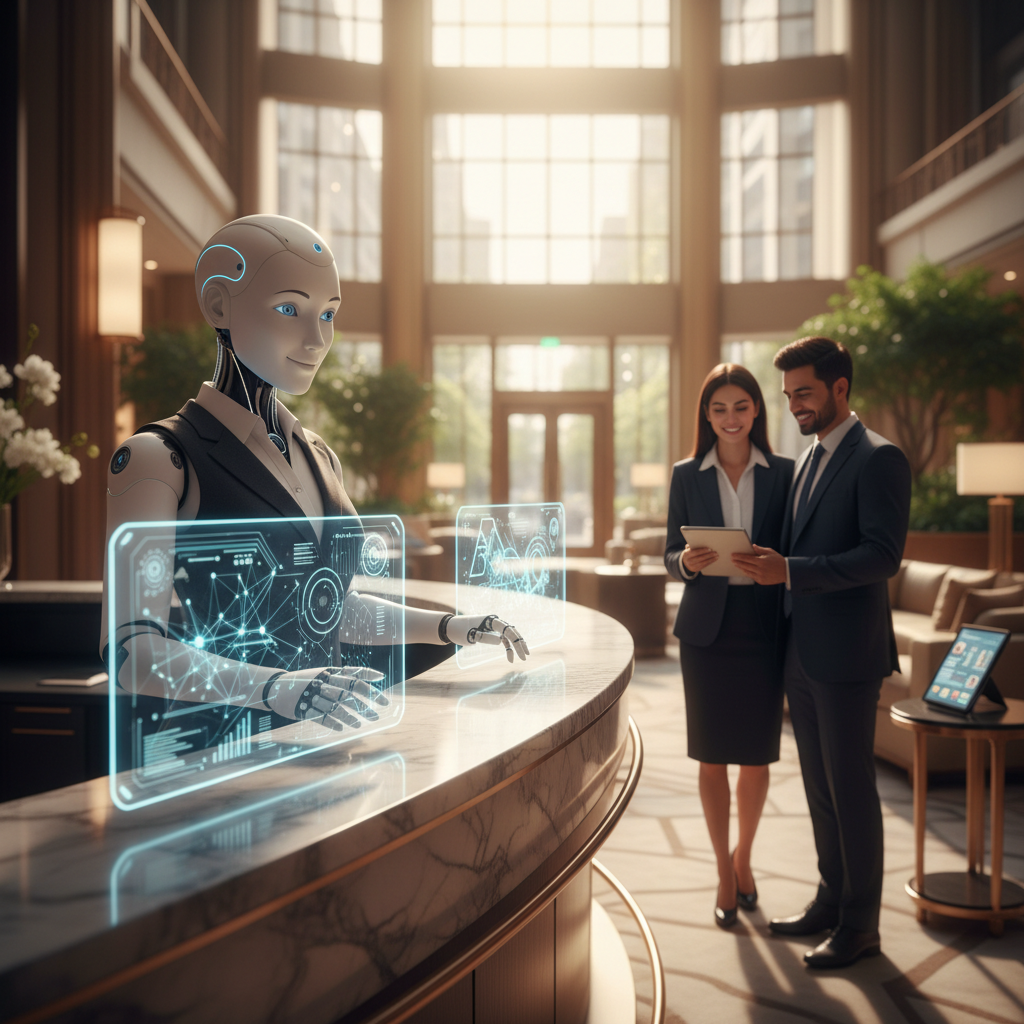
The hospitality industry, a sector historically defined by human touch and personalized service, is undergoing a profound transformation driven by artificial intelligence. Far from replacing the essential human element, **AI for hotels** is emerging as a powerful co-pilot, augmenting human capabilities, streamlining operations, and delivering hyper-personalized guest experiences at scale. This comprehensive article delves into what **hotel artificial intelligence** truly means for modern establishments, explores its myriad use cases, quantifies its return on investment, guides through implementation, and forecasts its trajectory towards 2026 and beyond.
## What AI Means for the Hotel Industry
At its core, **AI for hotels** refers to the application of machine learning, natural language processing, computer vision, and predictive analytics to various operational and guest-facing aspects of a hotel business. It's about enabling systems to learn from data, identify patterns, make predictions, and automate tasks that traditionally required human intervention, often with greater speed and accuracy. This translates into smarter decision-making, optimized resource allocation, and a more seamless, intuitive guest journey.
For hoteliers, AI isn't just a buzzword; it's a strategic imperative. The sheer volume of data generated daily – from booking patterns and guest preferences to energy consumption and maintenance requests – presents an insurmountable challenge for manual analysis. AI systems can process this data, uncover actionable insights, and even execute decisions autonomously, freeing up staff to focus on high-value, empathetic interactions that truly differentiate a hotel.
## Key Use Cases: AI Across the Hotel Ecosystem
**Hotel artificial intelligence** permeates every facet of a property's operations, from the moment a potential guest considers booking to their post-stay feedback. Its applications are diverse, impactful, and continually evolving.
### 1. Front Office & Guest Services: The AI-Powered Welcome
The front office is often the first and last point of contact for guests, making efficiency and personalization paramount. AI transforms this critical area:
* **AI-Powered Chatbots and Virtual Concierges:** These tools handle routine inquiries (e.g., Wi-Fi password, restaurant hours, local attractions) 24/7 across various channels like website, mobile apps, and messaging platforms. They can answer up to 80% of common questions, reducing call volumes by 30-40% and allowing human staff to address complex issues. Advanced chatbots can even facilitate check-in/check-out, room service orders, and spa bookings, enhancing convenience and reducing wait times.
* **Personalized Recommendations:** Leveraging guest data (past stays, preferences, loyalty program status), AI algorithms can suggest tailored upsells (e.g., room upgrades, premium services) or local experiences, increasing ancillary revenue and guest satisfaction. For instance, a guest who frequently orders vegan meals might receive proactive recommendations for nearby vegan restaurants or plant-based room service options.
* **Predictive Staffing:** AI analyzes historical data on occupancy, events, and seasonal trends to predict staffing needs more accurately. This ensures optimal front desk coverage, minimizing both overstaffing and understaffing, leading to better service levels and reduced labor costs.
* **Facial Recognition for Seamless Check-in:** While raising privacy considerations, some hotels are exploring facial recognition for expedited, keyless check-in, enhancing security and speed for registered guests.
### 2. Housekeeping & Operations: Intelligent Efficiency
Housekeeping is a labor-intensive department where AI can drive significant operational efficiencies and cost savings.
* **Predictive Maintenance:** AI-powered sensors monitor equipment (HVAC, elevators, kitchen appliances) for anomalies, predicting potential failures before they occur. This shifts maintenance from reactive to proactive, reducing downtime by up to 50% and extending asset lifespan. For example, an AI system might detect a slight increase in vibration in an HVAC unit, signaling a need for inspection before it breaks down completely.
* **Optimized Housekeeping Schedules:** AI algorithms analyze check-in/check-out times, guest preferences (e.g., 'do not disturb' requests), and room status to create the most efficient cleaning routes and schedules for staff. This can reduce cleaning times by 10-15% and improve staff productivity, ensuring rooms are ready precisely when needed.
* **Inventory Management:** AI tracks linen, amenity, and cleaning supply usage, predicting future demand and automating reorder processes. This minimizes waste, prevents stockouts, and reduces procurement costs by 5-10%.
* **Energy Management Systems:** AI learns from occupancy patterns, weather forecasts, and guest preferences to intelligently adjust lighting, heating, and air conditioning, reducing energy consumption by 15-25% without compromising guest comfort.
### 3. Revenue Management: Maximizing Profitability with Precision
**AI hotel management** excels in revenue optimization, moving beyond traditional revenue management systems to offer dynamic, granular pricing and forecasting.
* **Dynamic Pricing & Demand Forecasting:** AI analyzes vast datasets including historical booking data, competitor pricing, local events, weather, flight patterns, and even social media sentiment to predict demand with unprecedented accuracy. This enables real-time, dynamic pricing adjustments that maximize RevPAR (Revenue Per Available Room) by up to 7-12%, ensuring the optimal price point for every room, every day.
* **Personalized Offerings:** Beyond basic room rates, AI identifies opportunities for personalized upsells and cross-sells (e.g., spa packages, F&B credits, late check-out) based on individual guest profiles and predicted willingness to pay, boosting ancillary revenue by 5-10%.
* **Channel Optimization:** AI helps hoteliers understand which distribution channels (OTAs, direct bookings, GDS) are most profitable for specific segments and demand periods, allowing for smarter allocation of inventory and marketing spend.
* **Cancellation Prediction:** AI models can predict the likelihood of a booking being canceled, allowing hotels to strategically overbook slightly or implement targeted re-engagement campaigns to reduce no-shows.
### 4. Marketing & Sales: Hyper-Targeted Engagement
AI revolutionizes how hotels attract, engage, and retain guests through data-driven marketing efforts.
* **Personalized Marketing Campaigns:** AI segments guests based on behavior, preferences, and demographics, enabling hyper-targeted email campaigns, social media ads, and website content. This can lead to a 20-30% increase in conversion rates and higher engagement.
* **Sentiment Analysis:** AI analyzes guest reviews and social media mentions to gauge public perception, identify pain points, and understand what guests love. This provides invaluable insights for improving services and crafting more effective marketing messages. For example, if sentiment analysis reveals consistent praise for a new breakfast buffet item, marketing can highlight this in future campaigns.
* **Predictive Guest Lifetime Value (LTV):** AI identifies guests with high LTV potential, allowing hotels to prioritize loyalty programs and personalized retention strategies, reducing customer acquisition costs.
* **Ad Spend Optimization:** AI algorithms continuously optimize digital advertising campaigns by identifying the most effective channels, keywords, and ad creatives, maximizing ROI on marketing budgets.
### 5. Guest Experience: The Heart of Hospitality, Amplified by AI
Ultimately, all AI applications converge on enhancing the guest experience, making it more seamless, personalized, and memorable.
* **Voice-Activated Room Controls:** Smart rooms equipped with AI assistants (like Alexa for Hospitality or custom solutions) allow guests to control lighting, temperature, curtains, and even order room service using voice commands, offering convenience and a touch of luxury.
* **Proactive Service Recovery:** AI monitors guest feedback channels in real-time. If a negative review or complaint is detected, AI can alert staff immediately, enabling proactive service recovery before the issue escalates, turning potential detractors into loyal advocates.
* **Personalized In-Stay Communication:** AI can trigger personalized messages during a guest's stay, offering local recommendations, reminding them of booked amenities, or checking in on their comfort, fostering a feeling of being valued.
* **Seamless Check-in/Check-out:** Beyond chatbots, AI-powered kiosks or mobile apps can handle the entire check-in/check-out process, including digital key delivery, reducing queues and providing flexibility for guests.
## Concrete ROI: Quantifying the Impact of AI in Hotels
The adoption of **hotel artificial intelligence** is not merely about staying competitive; it's about driving tangible financial returns. While specific figures vary based on the hotel's size, market, and implementation scope, industry reports and early adopters consistently demonstrate significant ROI.
* **Increased Revenue:** Dynamic pricing and personalized upsells can boost RevPAR by **7-12%**. Ancillary revenue from personalized offers can see a **5-10%** increase. Direct bookings, often influenced by personalized website experiences, can rise by **15-20%**, reducing costly OTA commissions.
* **Cost Reduction:** Operational efficiencies are a major driver of savings. Predictive maintenance can reduce equipment downtime by **up to 50%** and maintenance costs by **10-20%**. Optimized housekeeping schedules can cut labor costs by **10-15%**. Energy management systems typically yield **15-25%** savings on utilities. Automated customer service via chatbots can reduce call center costs by **30-40%**.
* **Enhanced Guest Satisfaction & Loyalty:** Studies show that hotels leveraging AI for personalized experiences report higher guest satisfaction scores, often seeing an increase of **10-20%** in positive reviews. This translates into higher repeat booking rates and stronger brand loyalty, which are critical for long-term profitability.
* **Improved Operational Efficiency:** Reduced manual tasks free up staff time, allowing them to focus on more strategic and guest-facing roles. This can lead to a **20-30%** improvement in staff productivity and job satisfaction, reducing turnover rates.
* **Data-Driven Decision Making:** The ability to analyze vast datasets and derive actionable insights empowers management to make more informed decisions, leading to better resource allocation and strategic planning.
For a 200-room hotel generating $10 million in annual revenue, a conservative 5% increase in RevPAR due to AI could mean an additional $500,000 in revenue. Coupled with a 10% reduction in operational costs (e.g., $1 million in operational expenses becoming $900,000), the annual financial impact becomes substantial, often justifying the initial investment within 12-24 months.
## Comparison of Leading AI Solutions and Approaches
The market for **AI for hotels** is dynamic, with a wide array of solutions catering to different needs and budgets. Rather than specific product names, it's more useful to categorize them by their approach and integration capabilities.
### 1. Integrated PMS/CRS AI Modules
Many leading Property Management Systems (PMS) and Central Reservation Systems (CRS) are now incorporating AI capabilities directly into their platforms. These integrated solutions offer seamless data flow and a unified view of operations.
* **Pros:** Deep integration with core hotel systems, single vendor relationship, often easier implementation for existing users.
* **Cons:** May offer less specialized or cutting-edge AI features compared to best-of-breed solutions, potential vendor lock-in.
* **Examples:** Advanced modules within major PMS platforms offering dynamic pricing, guest profiling, and automated task management.
### 2. Best-of-Breed AI Specialists
These are companies that specialize in a particular AI application, such as advanced revenue management, sophisticated chatbots, or predictive maintenance platforms. They often leverage cutting-edge algorithms and offer deep functionality.
* **Pros:** Highly specialized and powerful AI capabilities, often leading innovation in their niche, can be integrated with existing systems via APIs.
* **Cons:** Requires careful integration with existing tech stack, potential for managing multiple vendors, higher complexity in data synchronization.
* **Examples:** Dedicated revenue management systems with advanced machine learning, specialized guest communication platforms, AI-powered energy management solutions.
### 3. Custom AI Development & Data Science Consultancies
For larger hotel groups or those with unique operational challenges, custom AI solutions developed in-house or with the help of data science consultancies can be beneficial.
* **Pros:** Tailored precisely to specific needs, competitive advantage through proprietary AI, full control over data and intellectual property.
* **Cons:** High upfront cost, significant time investment, requires in-house data science expertise or reliance on external consultants.
* **Examples:** A large chain developing a proprietary AI for hyper-local demand forecasting across its diverse portfolio.
### 4. Cloud-Based AI Platforms
Many AI solutions are offered as Software-as-a-Service (SaaS) platforms, leveraging cloud computing for scalability and accessibility.
* **Pros:** Lower upfront costs, flexible subscription models, automatic updates, accessible from anywhere.
* **Cons:** Data security concerns (though cloud providers have robust measures), reliance on internet connectivity.
* **Examples:** AI-powered marketing automation platforms, cloud-based virtual assistants.
When evaluating solutions, hoteliers should consider their current tech stack, budget, specific pain points, desired ROI, and the vendor's track record, data security protocols, and integration capabilities.
## Step-by-Step Implementation Guide for AI in Hotels
Implementing **AI hotel management** solutions requires a strategic, phased approach to ensure successful adoption and maximum ROI.
### Step 1: Assess Needs and Define Objectives (Foundation)
* **Identify Pain Points:** Where are the biggest operational inefficiencies, guest complaints, or revenue gaps? (e.g., high call volume, inconsistent pricing, slow maintenance response).
* **Define Clear KPIs:** What measurable outcomes do you expect? (e.g., reduce call volume by X%, increase RevPAR by Y%, improve guest satisfaction by Z points).
* **Stakeholder Buy-in:** Engage leadership, department heads, and front-line staff early to foster understanding and support.
* **Data Audit:** Understand what data you currently collect, its quality, and where it resides. AI thrives on clean, comprehensive data.
### Step 2: Research and Select the Right Solutions (Planning)
* **Market Research:** Explore vendors that align with your identified needs and objectives. Look for proven track records in hospitality.
* **Integration Capabilities:** Prioritize solutions that seamlessly integrate with your existing PMS, CRS, CRM, and other core systems via robust APIs.
* **Scalability:** Choose solutions that can grow with your hotel's needs and potentially expand across multiple properties.
* **Vendor Due Diligence:** Evaluate vendor support, training, data security (GDPR, CCPA compliance), and long-term vision.
* **Start Small (Pilot Program):** Consider piloting a single AI solution in one department or property to test its effectiveness and gather internal feedback before a wider rollout.
### Step 3: Data Preparation and Integration (Technical Setup)
* **Data Cleansing:** AI models are only as good as the data they're trained on. Invest time in cleaning, standardizing, and enriching your historical data.
* **API Integration:** Work closely with vendors and your IT team to ensure smooth data flow between your existing systems and the new AI platform.
* **Data Governance:** Establish clear policies for data collection, storage, usage, and privacy to ensure compliance and build trust.
### Step 4: Training and Deployment (Launch)
* **Staff Training:** This is crucial. Train staff not just on how to use the new AI tools, but also on *why* they are being implemented and how they will augment their roles, not replace them. Emphasize the benefits of freeing up time for more meaningful guest interactions.
* **Phased Rollout:** If piloting, expand gradually. If deploying broadly, consider a phased approach by department or property to manage change effectively.
* **Communication:** Clearly communicate the changes to both staff and guests (where applicable, e.g., new chatbot features) to manage expectations.
### Step 5: Monitor, Analyze, and Optimize (Continuous Improvement)
* **Track KPIs:** Continuously monitor the key performance indicators defined in Step 1. Are you meeting your objectives?
* **Gather Feedback:** Collect feedback from staff and guests on an ongoing basis. What's working? What needs improvement?
* **Iterate and Refine:** AI is not a 'set it and forget it' technology. Regularly analyze performance, adjust parameters, and retrain models with new data to optimize results.
* **Stay Updated:** The AI landscape evolves rapidly. Keep abreast of new features and advancements from your vendors.
## 2026 Trends: The Future of AI in Hospitality
Looking ahead to 2026, **AI for hotels** will become even more sophisticated, integrated, and pervasive. Several key trends will shape its evolution:
### 1. Hyper-Personalization at Scale
AI will move beyond basic recommendations to anticipate guest needs even before they articulate them. Imagine a guest arriving to a room already set to their preferred temperature, with their favorite music playing, and a personalized welcome message on the TV, all based on AI learning from past behaviors and even external data points. This will be driven by increasingly sophisticated predictive analytics and deeper integration across all guest touchpoints.
### 2. Proactive and Predictive Service Delivery
AI will enable hotels to shift from reactive problem-solving to proactive issue prevention. Predictive maintenance will become standard, preventing disruptions. AI will analyze guest sentiment in real-time, identifying potential dissatisfaction signals (e.g., repeated requests, negative body language via computer vision at check-in) and prompting staff intervention before a formal complaint is made.
### 3. Advanced Robotics and Automation Integration
While not replacing human staff entirely, we'll see more sophisticated robotic integration. Beyond simple delivery robots, AI-powered robots might assist with complex cleaning tasks, luggage handling, or even basic food preparation in certain contexts, especially in back-of-house operations to address labor shortages.
### 4. AI-Powered Sustainable Operations
With increasing pressure for sustainability, AI will play a crucial role. Intelligent energy grids, waste management optimization, and water conservation systems driven by AI will become standard, not just for cost savings but for meeting environmental targets. AI will analyze consumption patterns and suggest eco-friendly operational adjustments in real-time.
### 5. Enhanced Security and Safety
AI-powered surveillance systems with advanced analytics will enhance guest and staff safety. These systems can detect unusual behavior, identify unauthorized access, or even monitor for health and safety compliance (e.g., social distancing, mask-wearing where applicable), providing real-time alerts to security personnel.
### 6. Seamless Voice and Multimodal Interfaces
Voice AI will become more natural and capable, allowing guests to interact with hotel systems effortlessly. Furthermore, multimodal AI, combining voice, gestures, and visual cues, will create more intuitive and inclusive interfaces for guests of all abilities.
### 7. Ethical AI and Data Privacy as a Priority
As AI becomes more embedded, ethical considerations and data privacy will move to the forefront. Hotels will need robust frameworks for transparent data usage, consent management, and algorithmic fairness to build and maintain guest trust. AI solutions will be designed with 'privacy-by-design' principles.
## Conclusion
**AI for hotels** is not merely an evolutionary step; it's a revolutionary leap that redefines the very essence of hospitality. By embracing **hotel artificial intelligence**, establishments can unlock unprecedented levels of operational efficiency, achieve significant cost savings, and elevate the guest experience to new, personalized heights. The journey from traditional operations to an AI-powered future requires strategic planning, careful implementation, and a commitment to continuous optimization. However, the quantifiable ROI and the promise of a more efficient, profitable, and guest-centric future make this transformation not just desirable, but essential for any hotel aiming to thrive in the competitive landscape of 2026 and beyond. The future of hospitality is intelligent, and AI is its guiding force.