The 10 Most Technologically Advanced Cities for Hotel Innovation in 2026
From Tokyo to Dubai, Singapore to Las Vegas: a comprehensive guide to the cities redefining hospitality through AI, robotics, IoT, and biometric check-in systems.
Tecnologia Alberghiera
World Hotel Journal Editorial
## Executive Summary
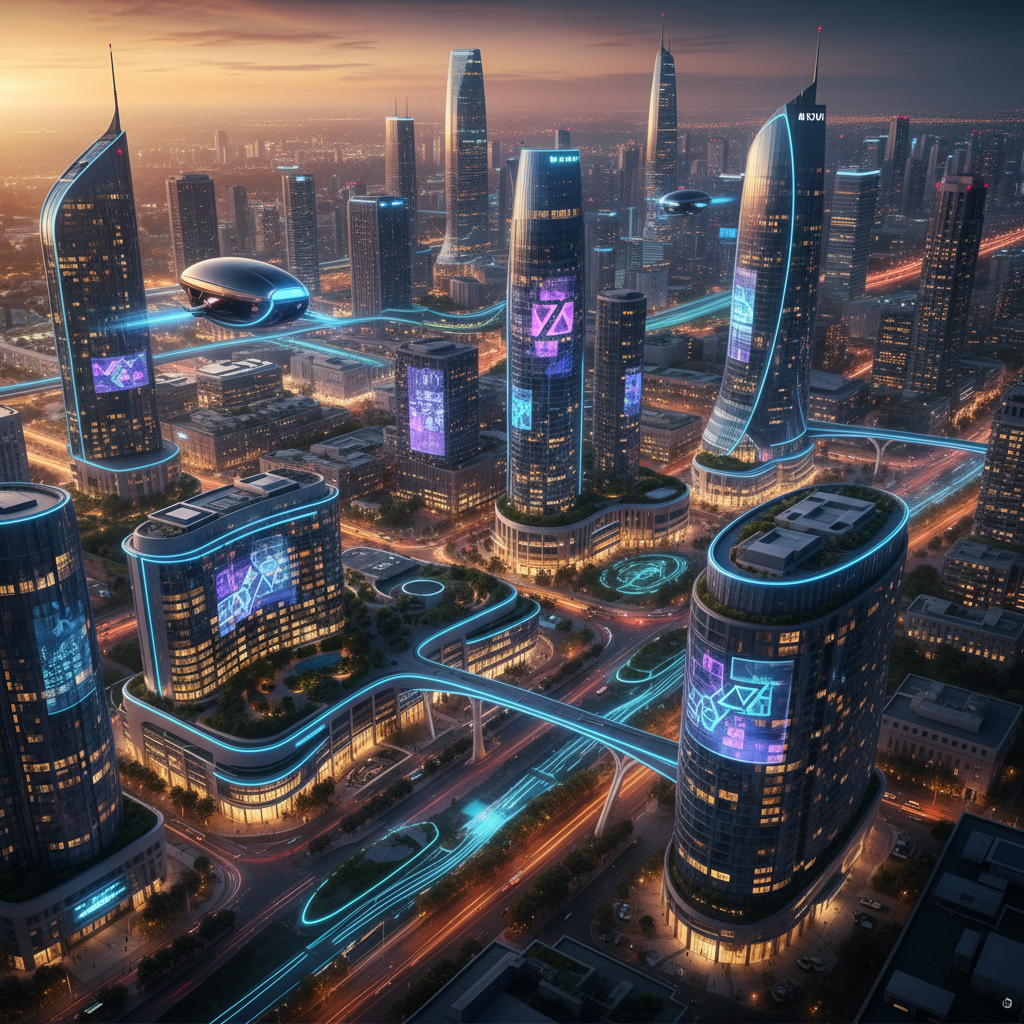
The global hospitality industry is undergoing an unprecedented transformation, driven by artificial intelligence, robotics, the Internet of Things, and biometric systems. Certain cities have emerged as open-air laboratories for hospitality innovation, thanks to mature technology ecosystems, supportive government policies, and a concentration of cutting-edge accommodations. This article examines the ten cities that in 2026 represent the global benchmark for hotel technology, featuring concrete data, real case studies, and strategic insights for industry operators.
## 1. Tokyo, Japan: The World Capital of Hotel Robotics
Japan has long been synonymous with technological innovation, and Tokyo stands as the epicenter of hospitality tech. The Henn-na Hotel, certified by Guinness World Records as the world's first hotel staffed almost entirely by robots, pioneered a model that has since spread across the country. At reception, humanoid androids and robotic dinosaurs greet guests, while rooms feature voice-controlled systems for temperature, lighting, and entertainment.
According to Phocuswire, the Japanese hospitality robotics market grew by 34% between 2024 and 2025, with over 200 properties integrating robots for room service, cleaning, and concierge duties. Tokyo also hosts CEATEC, Asia's largest technology exhibition, where hotel-specific solutions are unveiled annually, from NFC-based digital keys to AI-powered energy management systems.
The Japanese approach stands out for its attention to detail and guest experience: technology does not replace hospitality but amplifies it, creating a unique balance between operational efficiency and human warmth.
## 2. Singapore: The Smart City Ecosystem Powering Hospitality
Singapore consistently ranks first in global smart city indexes, and its hotel sector benefits directly. Marina Bay Sands leverages artificial intelligence and big data to anticipate guest needs: virtual assistants provide personalized recommendations based on preference history, while the AI system monitors energy consumption and automatically adjusts resources to minimize waste.
W Singapore Sentosa Cove has been ranked among the ten most technologically advanced hotels in the world by SiteMinder, thanks to its complete integration of IoT, voice control, and environmental personalization. Yotel Singapore has revolutionized compact hospitality with motorized beds, customizable lighting, self-check-in kiosks, and an innovative robotic luggage storage system that optimizes wait times.
The Singaporean government has invested over $1.5 billion in the Smart Nation Initiative, which includes specific programs for tourism sector digitalization. According to Hospitality Technology Magazine, 78% of hotels in Singapore had implemented at least one IoT solution by the end of 2025, the highest rate worldwide.
## 3. Dubai, UAE: The Future of Check-in Is Already Here
Dubai made history in December 2025 when Crown Prince Sheikh Hamdan bin Mohammed announced the citywide introduction of a contactless hotel check-in system based on biometrics and digital identity. This is the world's first system implemented at urban scale: guests upload their identification documents and biometric data once via smartphone, then bypass the front desk at all 820 hotels and apartments across the city.
The system, developed by the Dubai Department of Economy and Tourism (DET), uses facial recognition for repeat visitors, who account for nearly a quarter of annual visitation. This initiative is part of the D33 Economic Agenda, which aims to consolidate Dubai as a global tourism destination through digital transformation. Smart tunnels at Dubai International Airport have already reduced passport control times to mere seconds.
With 15.70 million international visitors in the first ten months of 2025 (up 5% year-on-year) and 36.71 million hotel room nights, Dubai demonstrates that technology can scale effectively even in ultra-high-volume contexts.
## 4. Seoul, South Korea: 5G and Robots Serving Hospitality
Seoul leverages its position as the world's 5G capital to enable an unprecedented hotel IoT ecosystem. The speed and minimal latency of Korea's 5G network allow connected devices in hotel rooms to communicate in real time, creating fluid and responsive experiences.
In June 2025, the Seoul Metropolitan Government launched the Smart Accommodation Support Program, a subsidy scheme to help small tourist hotels adopt smart technologies, including restaurant service robots that assist with food delivery, table clearing, and guest interaction. Hyundai has developed room service robots equipped with LIDAR sensors and cameras that navigate autonomously, avoiding both fixed and moving obstacles.
Henn-na Hotel Seoul Myeongdong brought the Japanese model to the Korean capital, while LOTTE HOTEL Seoul has integrated advanced robotic applications to enhance guest services. A study published in the International Journal of Hospitality Management in 2026 specifically analyzed the impact of AI robots in Korean smart hotels, finding a 23% increase in guest satisfaction at properties that adopted them.
## 5. Las Vegas, USA: The World's First Fully AI-Powered Hotel
Las Vegas, already known for its penchant for excess and innovation, has leaped into the future with the Otonomus Hotel, considered the world's first hotel entirely powered by artificial intelligence. The star of the property is Oto, a humanoid robot concierge that speaks over 50 languages, handles check-in, provides local tips, tells jokes, and personalizes stays based on guest preferences.
According to Fox5 Vegas, Oto wears a cap and polo shirt, displays animated facial expressions, and interacts with guests at human-like speed and accuracy. In March 2026, YY Group announced a year-long pilot program to test hospitality and security robots in live hotel settings in Las Vegas.
The city's convention hotels have demonstrated that self-check-in kiosks significantly reduce the need for front desk agents, particularly among younger guests. CoStar Group has highlighted how AI and robotics will define hotel industry winners as supply surges in the coming years.
## 6. London, United Kingdom: Technological Luxury and Innovation Hub
London combines the tradition of British hospitality with one of Europe's most dynamic technology ecosystems. The Eccleston Square Hotel represents the benchmark for technological luxury: adjustable beds with integrated massage functions, tablets in every room for service management, automatic curtains, smart mirrors with integrated TV screens, and soundproofing technology that ensures an unmatched rest experience.
The British capital hosts the Traveltech Lab, a dedicated hub for travel technology startups that promotes innovation, collaboration, and creativity, connecting tech startups with major travel industry corporations. Companies like Mews (the top-rated PMS on HotelTechReport), SiteMinder, and OTA Insight have chosen London as their European operational base, creating a unique cluster of expertise in business intelligence and hospitality hardware.
According to HotelTechReport, London ranks among the five most important cities globally for hotel technology, with a particular focus on business intelligence, revenue management, and innovative hardware solutions.
## 7. Amsterdam, Netherlands: Sustainability Meets Smart Innovation
Amsterdam has chosen a distinctive approach to hotel technology, placing sustainability at the heart of innovation. The Innovation Lighthouse, a living lab within the Amsterdam Smart City program, tests specific innovations to reduce the environmental footprint of hotel rooms and encourage sustainable guest behavior.
Yotel Amsterdam has integrated smart technologies ensuring a safe and socially distanced experience, with full digital room control via app. The city hosts a vibrant hotel-tech startup ecosystem with a particular focus on solutions that combine operational efficiency with environmental responsibility.
According to a paper published in MDPI in 2025, Amsterdam's smart city technologies not only improve the travel experience but actively contribute to the sustainability of urban tourism, a model that is inspiring other European cities.
## 8. Shenzhen, China: Plug-and-Play AI for Mass-Market Hospitality
Shenzhen has established itself as the nerve center of accessible and scalable hotel technology. QINGLANG Smart Hotel Technology, headquartered in the Nanshan District, develops AI systems for hotels that can be rapidly integrated into properties of any size. The city is also the birthplace of Zerith H1, the world's first hotel-grade humanoid robot specifically designed for housekeeping.
A Channel News Asia report highlighted how China's plug-and-play AI is powering hotels, hospitals, and factories, with affordability as the key driver for mass adoption. Nearby, Alibaba's FlyZoo Hotel in Hangzhou pioneered facial recognition check-in, robotic room service, and complete experience personalization through the Alibaba ecosystem.
The Chinese model distinguishes itself through implementation speed and contained costs, making advanced hotel technology accessible even to mid-range properties — a crucial aspect for democratizing innovation in the sector.
## 9. San Francisco, USA: The Heart of Hospitality Software
San Francisco, with its proximity to Silicon Valley, serves as headquarters for the leading hospitality software companies. The city has placed AI at the center of its smart city strategy, with over 30,000 IoT sensors collecting real-time data to optimize urban services, including the tourism sector.
Companies like Oracle Hospitality, Salesforce Hospitality, and dozens of venture capital-funded Bay Area startups develop PMS, CRM, revenue management, and guest experience solutions adopted by hotel chains worldwide. According to HotelTechReport, San Francisco is the premier global hub for hospitality "big tech," with a focus on cloud-native and AI-first software solutions.
The concentration of tech talent, venture capital, and innovation culture makes San Francisco an irreplaceable engine for developing the technologies that define the future of global hospitality.
## 10. Fort Worth, Texas: The IoT Hotel Benchmark
Fort Worth might seem an unexpected choice, but The Sinclair Hotel has established a new global standard for Internet of Things applications in hospitality. In this property, every element — from the shower to the bathroom mirror — is interconnected and controllable via mobile app. The energy management system optimizes consumption, significantly reducing the building's carbon footprint.
The most significant innovation is the use of Power over Ethernet (PoE) technology, which reduces the number of electrical cables and improves the building's energy efficiency. Contactless doors and elevators complete an experience where technology is invisible yet omnipresent, enhancing safety and comfort without ever feeling intrusive.
The Sinclair demonstrates that hotel innovation is not exclusive to major metropolises: with the right vision and investment, even mid-sized cities can become global reference points.
## Comparative Overview: The 10 Cities at a Glance
| City | Key Technology | Reference Hotel | Standout Feature |
|---|---|---|---|
| Tokyo | Robotics, AI, voice control | Henn-na Hotel | World's first robot hotel |
| Singapore | AI, big data, IoT | Marina Bay Sands, W Sentosa | 78% hotels with IoT |
| Dubai | Citywide biometric check-in | 820 connected hotels | First urban biometric system |
| Seoul | 5G, robots, LIDAR sensors | LOTTE Hotel, Henn-na Seoul | World's fastest 5G network |
| Las Vegas | Full AI, robot concierge | Otonomus Hotel | First fully AI-powered hotel |
| London | Tech luxury, smart mirrors | Eccleston Square Hotel | Travel-tech startup hub |
| Amsterdam | Smart sustainability, green IoT | Yotel Amsterdam | Sustainability living lab |
| Shenzhen | Plug-and-play AI, cleaning robots | FlyZoo Hotel (Hangzhou) | Accessible, scalable technology |
| San Francisco | Cloud software, AI-first | Silicon Valley ecosystem | Global hospitality software hub |
| Fort Worth | Total IoT, PoE | The Sinclair Hotel | IoT hotel benchmark |
## Strategic Recommendations
For hotel operators seeking to position themselves at the forefront of technological innovation, several key insights emerge from the analysis of these ten cities.
First, it is essential to adopt a gradual approach to digitalization, starting with the highest-impact solutions such as contactless check-in and smart energy management systems, which offer rapid and measurable return on investment.
Second, technology choices should be guided by guest profiles: business-oriented properties benefit most from operational efficiency solutions, while leisure hotels can differentiate through personalized and immersive experiences.
Third, sustainability is no longer optional but a competitive requirement: Amsterdam's model demonstrates that technology and environmental responsibility can reinforce each other.
Finally, Shenzhen's case teaches us that innovation need not be expensive: Chinese plug-and-play solutions are democratizing access to advanced hotel technology, opening opportunities even for independent and mid-range properties.
The future of hospitality belongs to those who can integrate these technologies harmoniously, keeping the human experience and service quality at the center.