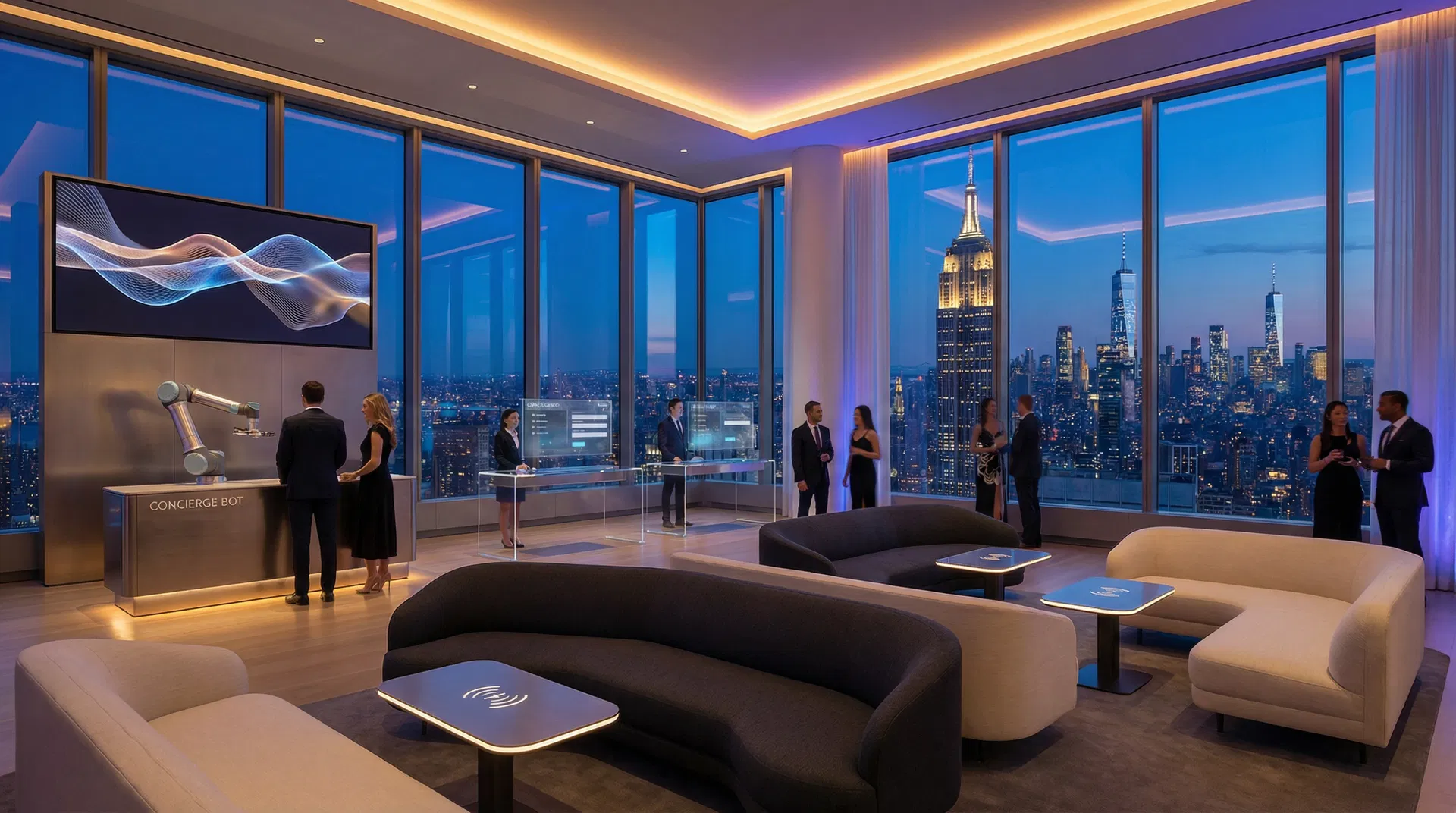
## New York City: The Global Capital of Hotel Innovation
New York City has always been a laboratory for the future of hospitality. In 2026, the city is experiencing an unprecedented wave of hotel openings that are pushing the boundaries of technology, design, and guest experience. According to STR Analytics, NYC leads the United States in new-build hotel openings for the second consecutive year, with Lodging Econometrics tallying 29 projects comprising 5,689 guestrooms currently under construction in the Big Apple.
What makes this generation of hotels different is the seamless integration of technology into every touchpoint of the guest journey. From AI-powered concierges that anticipate your needs before you articulate them, to robotic luggage handlers that eliminate check-in friction, to smart rooms where a single tablet controls lighting, temperature, blinds, and entertainment — these properties are not merely adopting technology. They are reimagining what it means to stay in a hotel.
According to the Canary Technologies 2026 Hotel Industry Report, 82% of hotels are now expanding their use of artificial intelligence, with guest-facing AI applications growing 340% year-over-year. New York, as always, is leading this revolution. Here are the 10 hotels that best exemplify how technology is transforming the NYC hospitality landscape.
---
## 1. Faena New York — Where Art Meets Digital Innovation
**Location:** 768 Fifth Avenue, Midtown Manhattan | **Rooms:** 120 | **Opened:** 2025
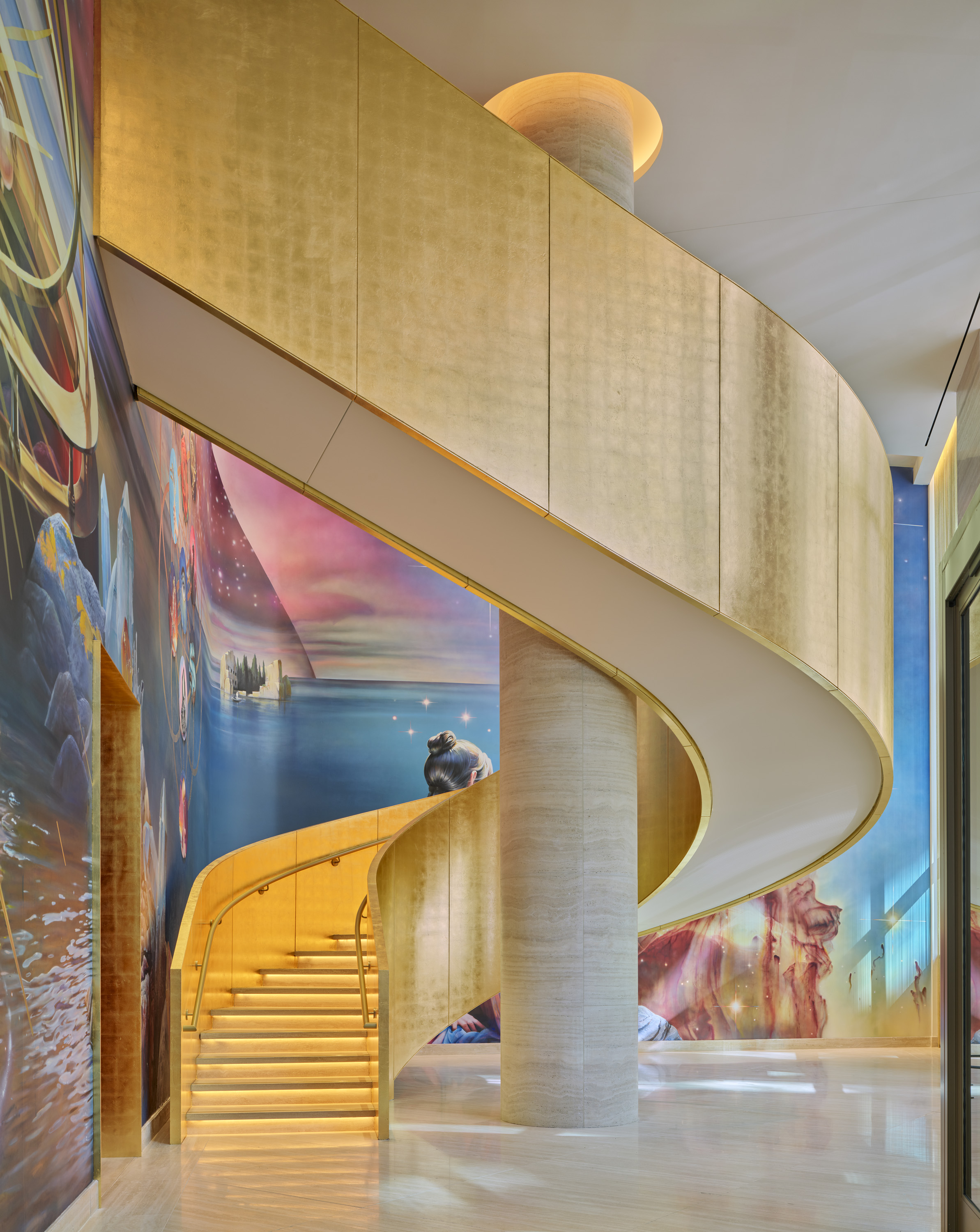
Two decades after Alan Faena introduced his namesake brand in Buenos Aires, Faena New York has arrived as a love letter to Manhattan — one written in bold colors, immersive technology, and boundary-pushing art. The 120-room hotel represents a new paradigm where art and technology converge to create experiences that transcend traditional hospitality.
The technological centerpiece is Argentine artist Alberto Garutti’s monumental chandelier installation, which transforms **real-time global lightning data** into pulsating light patterns. This is not decorative technology — it is a living, breathing digital artwork that connects guests to natural phenomena occurring thousands of miles away. The hotel’s Faena Theater, debuting in spring 2026, features cutting-edge audiovisual systems designed for immersive performances that blur the line between audience and stage.
Every room integrates smart climate control, automated lighting scenes, and a digital concierge system that learns guest preferences across stays. The open-air plaza hosts rotating digital art installations that respond to environmental data, making Faena a hotel where technology serves beauty rather than efficiency alone.
---
## 2. Equinox Hotel Hudson Yards — The Wellness-Tech Powerhouse
**Location:** 35 Hudson Yards, Midtown West | **Rooms:** 212 | **Category:** Luxury Wellness
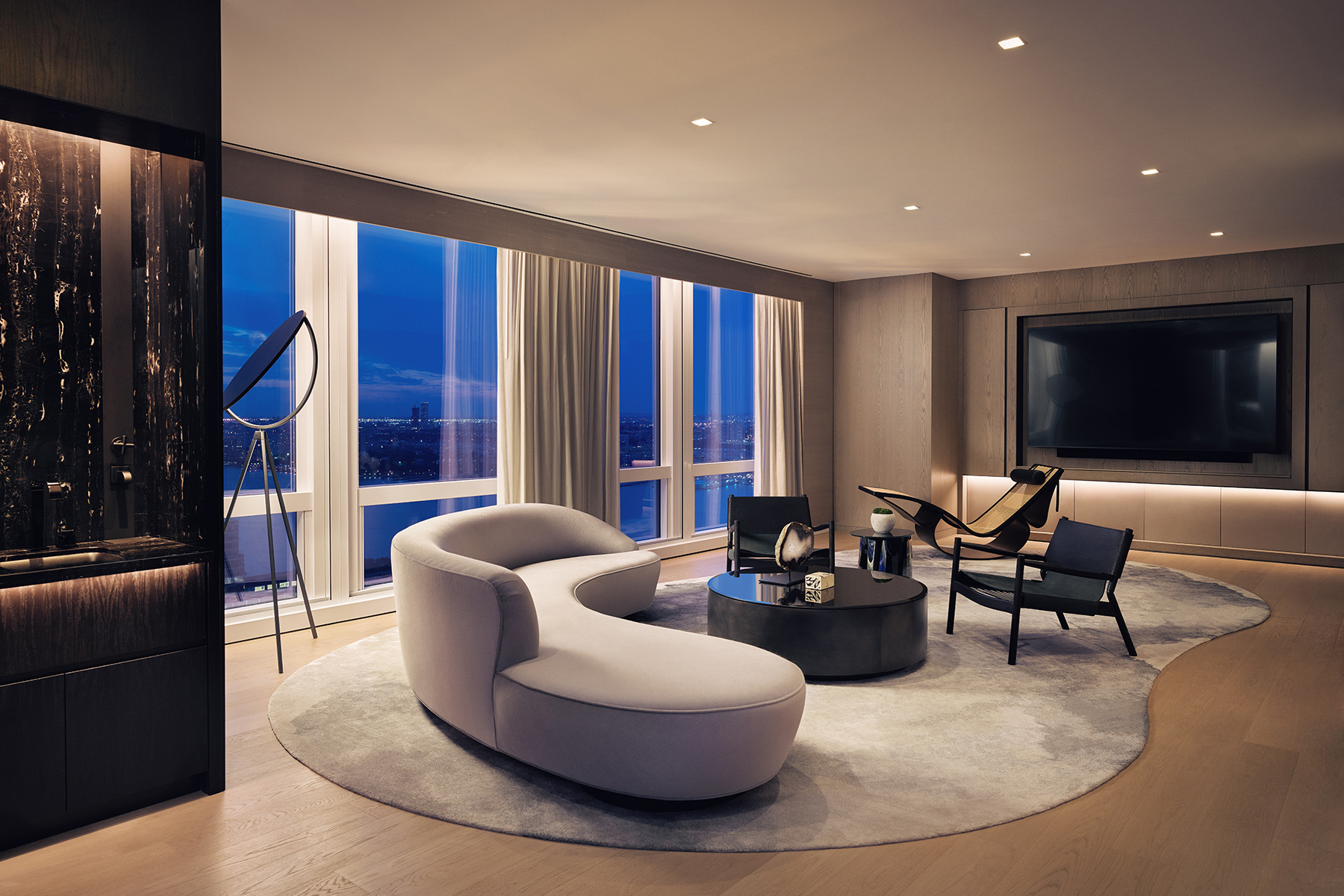
Equinox Hotel has established the gold standard for technology-driven wellness hospitality. Every aspect of the guest experience is mediated through a sophisticated **digital ecosystem** accessible via bedside tablet and mobile app. Guests control blinds, lighting, temperature, and privacy settings from a single interface, but the signature innovation is the **“Dark. Quiet. Cool.” sleep mode button** — developed in collaboration with sleep scientists — that instantly optimizes the entire room environment for restorative sleep.
The technology extends far beyond the room. Equinox’s spa features **cryotherapy chambers, infrared saunas, and MLX i3Dome technology** — a multi-sensory treatment combining far-infrared heat, negative ion therapy, and red light therapy. The hotel’s **switchable SmartGlass windows** transition from transparent to opaque at the touch of a button, offering instant privacy without curtains.
Mobile key access eliminates physical check-in entirely, while the digital platform handles in-room dining orders, group fitness class bookings, restaurant reservations, and access to thousands of digital publications through Press Reader. Equinox proves that when technology serves wellness, the result is transformative.
---
## 3. YOTEL NYC Times Square — The Robot Revolution
**Location:** 570 Tenth Avenue, Hell’s Kitchen | **Rooms:** 713 | **Average Price:** $208/night
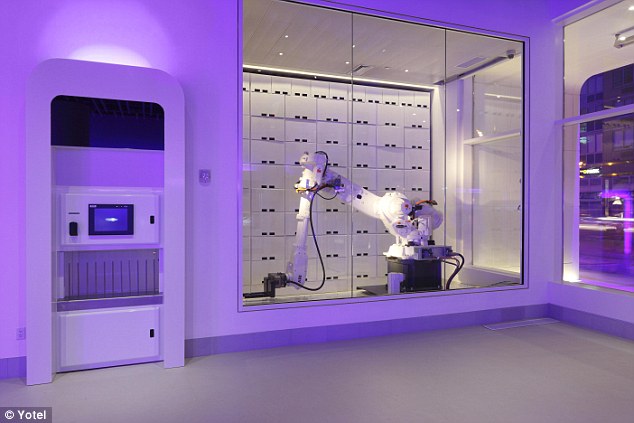
YOTEL NYC is where the robot revolution in hospitality becomes tangible. The hotel’s iconic **YOBOT** — a massive robotic arm in the lobby — handles luggage storage with mechanical precision, scanning, lifting, and depositing bags into secure compartments while guests watch in fascination. It is the most visible symbol of YOTEL’s philosophy: technology should be both functional and theatrical.
The 713 “cabin” rooms are masterclasses in tech-optimized compact living. **Motorized SmartBeds** fold and extend to transform sleeping quarters into living spaces at the push of a button. **Motion-activated sensors** manage lighting and air conditioning, ensuring energy efficiency without guest intervention. Smart TVs support direct streaming from personal devices, and self-service check-in kiosks eliminate front desk queues entirely.
YOTEL proves that technology-forward hospitality doesn’t require luxury price points. At approximately $208 per night in the heart of Manhattan, it delivers a guest experience that many five-star properties struggle to match in terms of pure technological innovation.
---
## 4. citizenM New York — The iPad-Controlled Smart Hotel
**Location:** Multiple NYC locations (Times Square, Bowery, Lower East Side) | **Category:** Budget-Luxury
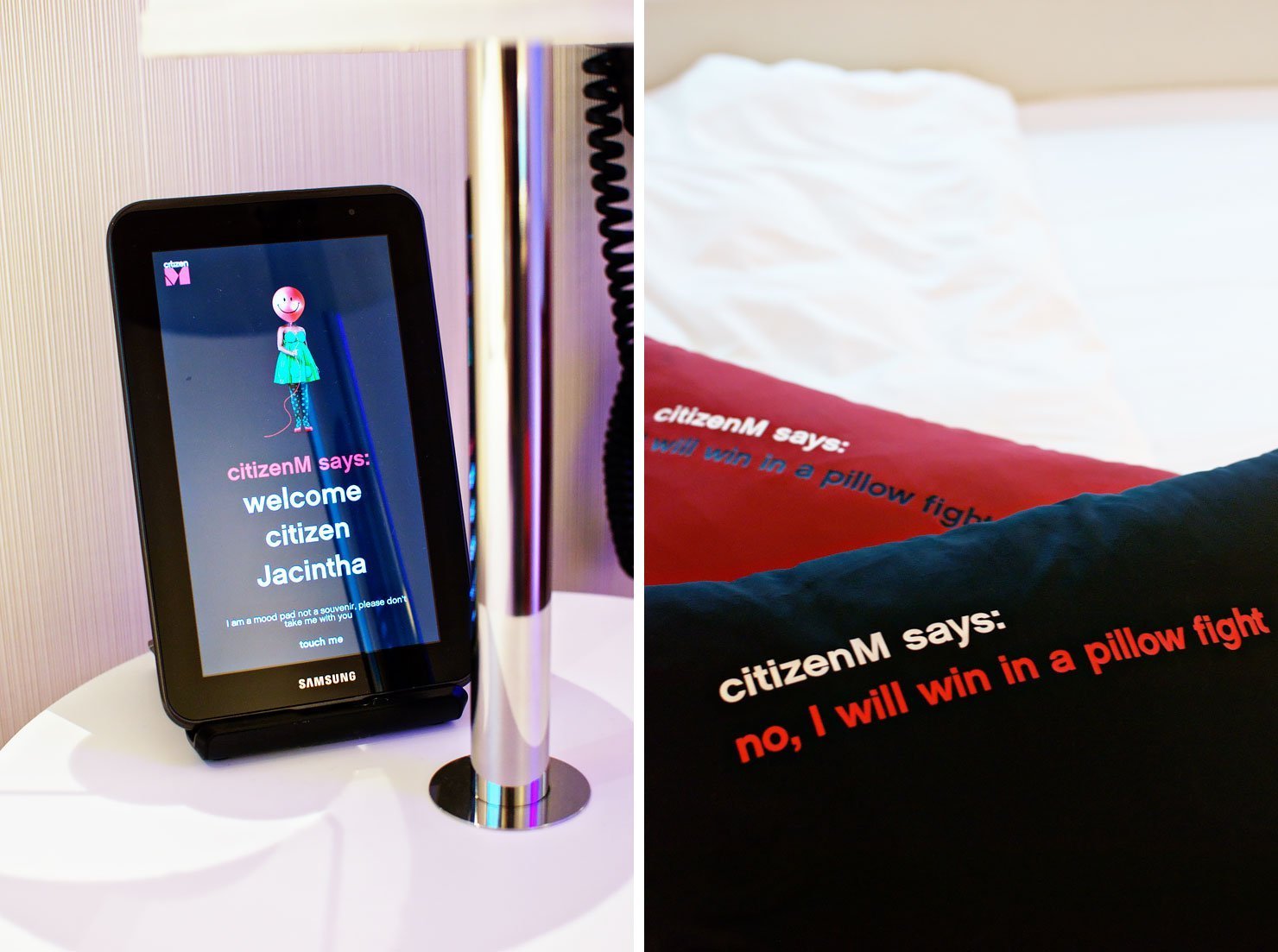
citizenM has perfected the concept of the **“affordable luxury smart hotel.”** With multiple locations across New York City, the Dutch brand delivers a consistently tech-forward experience built around a single, elegant idea: an **iPad controls your entire room**. Temperature, lighting color and intensity, blinds, TV content, mood settings — everything is managed through the bedside tablet’s intuitive **MoodPad** interface.
Self check-in kiosks in the art-filled lobbies process arrivals in under 60 seconds. Keyless room entry via smartphone eliminates the need for physical cards. The rooms themselves are compact but brilliantly designed, with XL king-size beds, powerful rainfall showers, and wall-to-wall windows. citizenM’s technology philosophy is democratic: every guest, regardless of room type, gets the same smart room experience.
The brand’s living room lobbies — filled with curated art collections and 24/7 food and beverage service — function as co-working spaces where digital nomads and business travelers converge. Free high-speed Wi-Fi throughout the property is a given, not a premium.
---
## 5. Hotel Park Ave — Design-Tech Fusion in NoMad
**Location:** NoMad, Manhattan | **Rooms:** 9 suites + standard rooms | **Opened:** 2026
The transformation of a former Mondrian hotel into Hotel Park Ave by Lore Group represents a new approach to technology in boutique hospitality. Creative director Jacu Strauss designed spaces where **technology is invisible yet omnipresent** — a philosophy he describes as “a metropolitan haven that is grounding, yet still in dialogue with the world outside.”
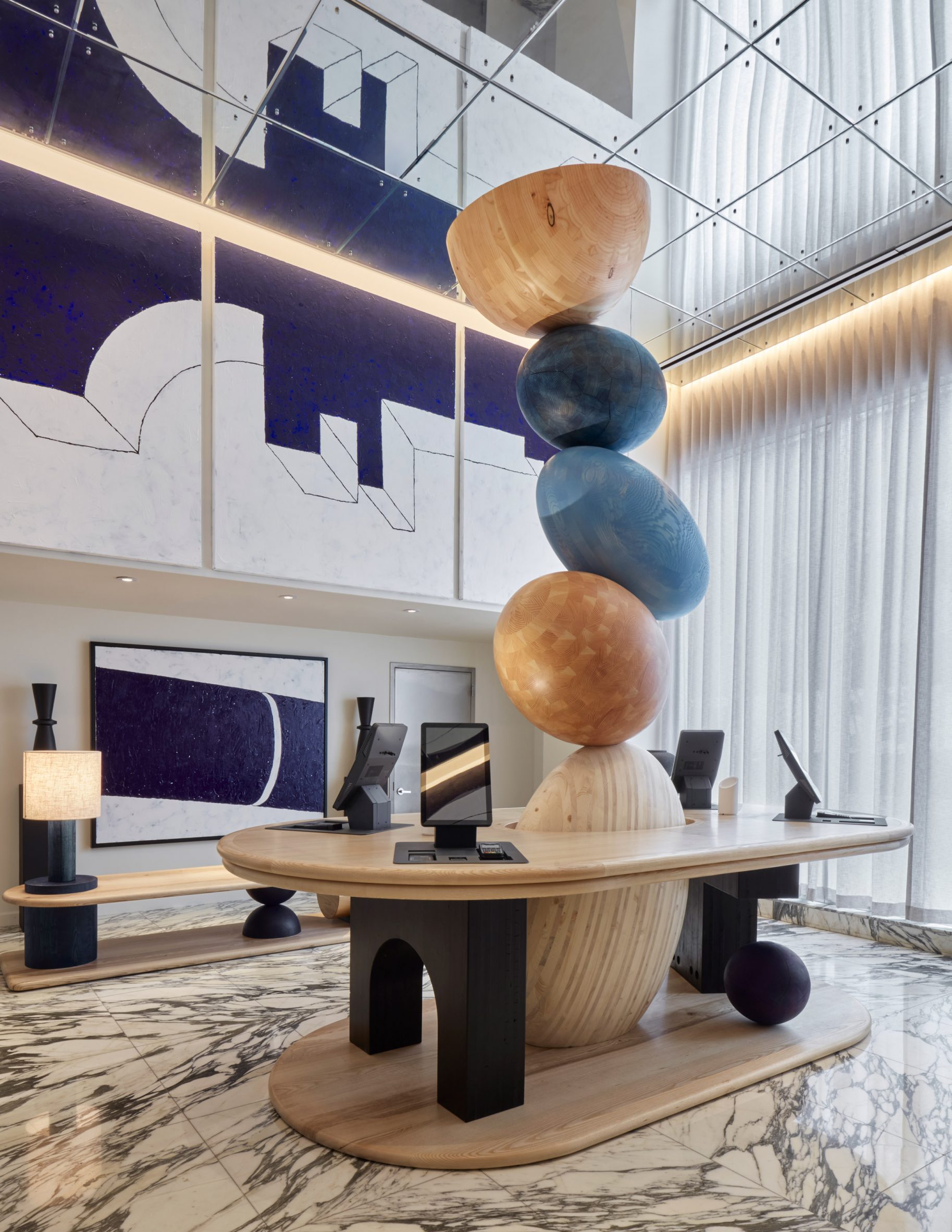
The lobby is anchored by a colorful 12-foot timber sculpture by London artist Jan Hendzel, while the subterranean bar Seed Library channels 1970s nostalgia through smart lighting systems that shift ambiance throughout the evening. The standout Nomad penthouse (1,275 sq ft) features integrated smart home controls, automated climate management, and a bespoke entertainment system.
Hotel Park Ave’s technology serves the design narrative: smart lighting enhances the interplay between warm textures and organic materials, while digital concierge services provide seamless access to NoMad’s vibrant dining and cultural scene. The hotel proves that technology can amplify intimacy rather than diminish it.
---
## 6. The Twenty Two New York — British Digital Elegance
**Location:** Union Square, Manhattan | **Rooms:** 78 (including 17 suites) | **Opened:** 2026
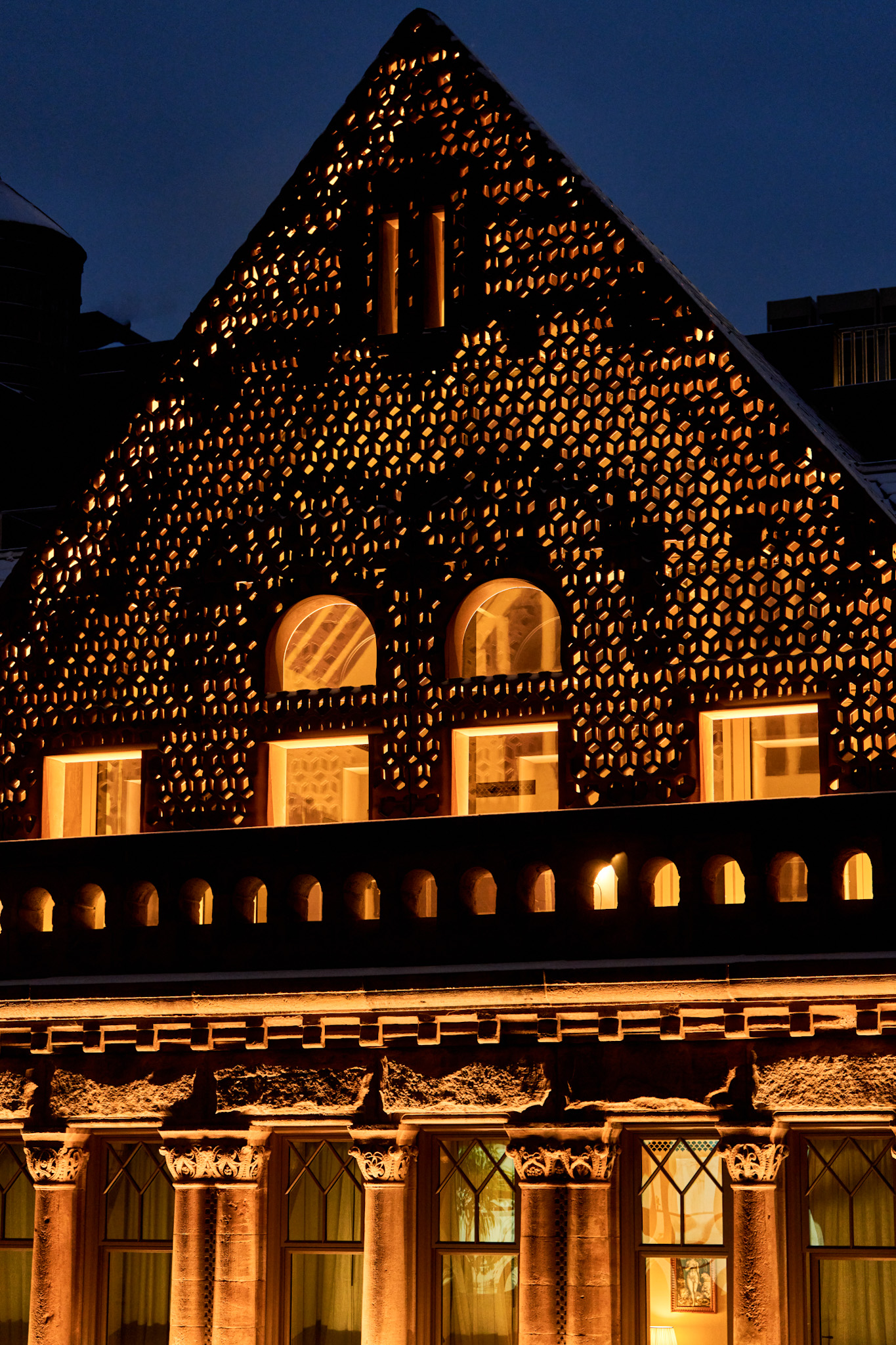
The UK brand’s stateside debut occupies the landmarked Margaret Louisa Home, where London-based Child Studio has created a contemporary interpretation of the American vernacular fusing Shaker, Mission, and Craftsman design elements. Cofounder Navid Mirtorabi’s vision — “to make luxury feel human” — extends to the hotel’s technology philosophy.
The Twenty Two integrates **discreet smart room technology** within its artisanal aesthetic. Digital concierge services, keyless entry, and personalized room settings operate behind the scenes, ensuring that technology enhances rather than interrupts the experience of staying in a historic Manhattan building. The members’ club features curated digital content and connectivity infrastructure designed for the creative and business elite.
The ground-floor Café Zaffri, a Post Company project, combines handsome millwork with modern POS and ordering systems that streamline service without sacrificing the warmth of human interaction. The sprawling penthouse with vaulted roof and skyline views features a fully integrated smart home system.
---
## 7. M Social Downtown — Digital Art Meets Financial District Energy
**Location:** Financial District, near Calatrava’s Oculus | **Opened:** 2026
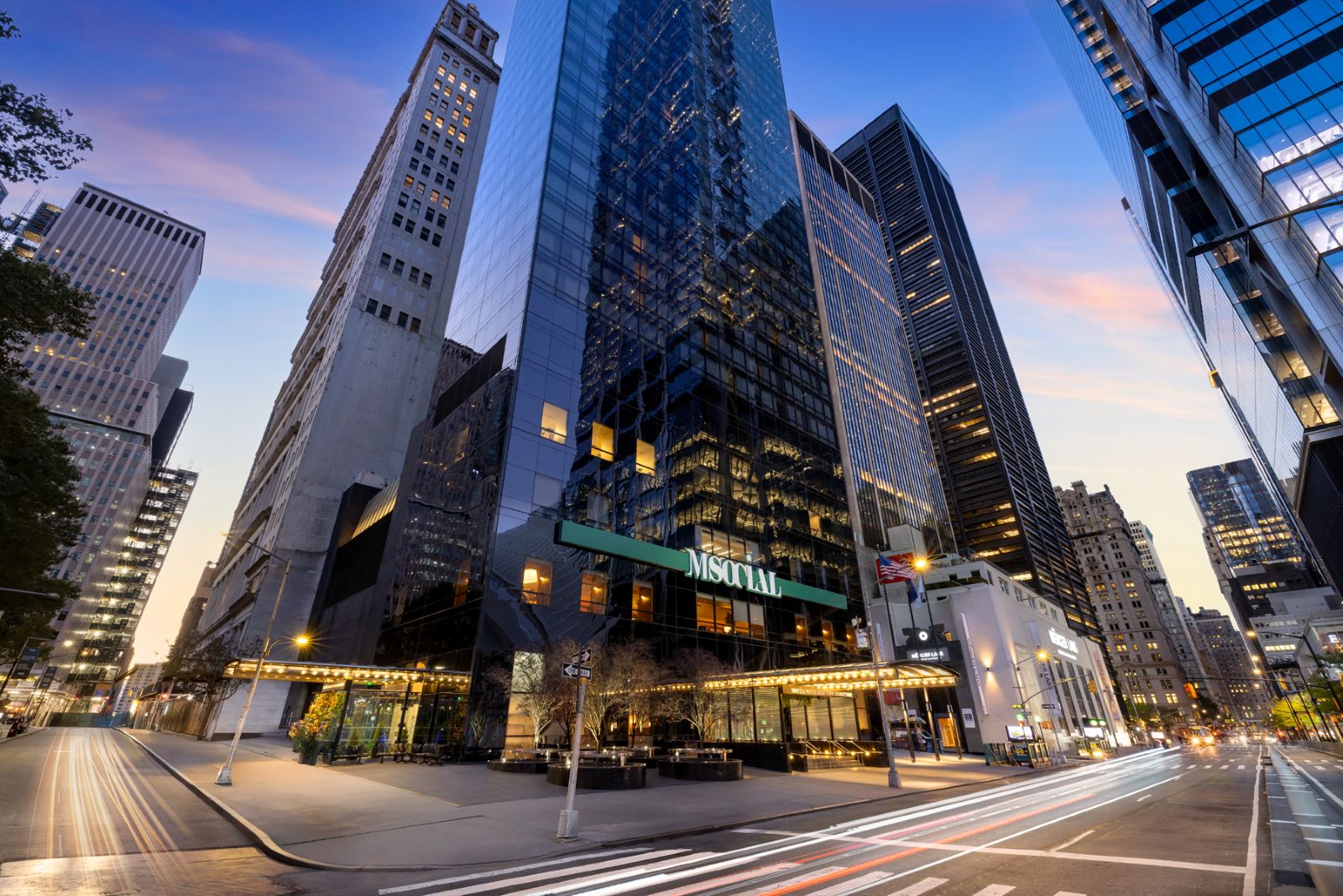
Positioned at the threshold of Santiago Calatrava’s iconic Oculus, M Social Downtown channels the expressive revival of Lower Manhattan through a fusion of digital art and hospitality technology. Principal designer Dan Mazzarini of Mazzarini & Co created spaces that reflect “the history of this neighborhood and New York” through technology-enhanced storytelling.
The hotel’s signature innovation is its **immersive digital art integration**. Custom murals by artist Michael Hildbrand in the elevator bays feature cloud wall graphics that invite daydreaming, while **wave-like acoustic ceiling panels** inspired by the aquifers rushing beneath the city create a kinetic, transportive rhythm. Printed ceramic tiles underfoot replicate city sidewalk patterns and even manhole covers, while **textured vinyl and backlit polycarbonate walls** emulate the gleam of local skyscrapers.
Conceived with Wall Street clientele in mind, the copper-toned check-in desks feature an ombré finish upon bull-shaped feet — a playful nod to the Financial District’s identity. Smart work stations with integrated power, high-speed connectivity, and diorama-style digital artwork accommodate the modern professional who demands both productivity and inspiration.
---
## 8. Kimpton Era Midtown — Engineered Elegance at Scale
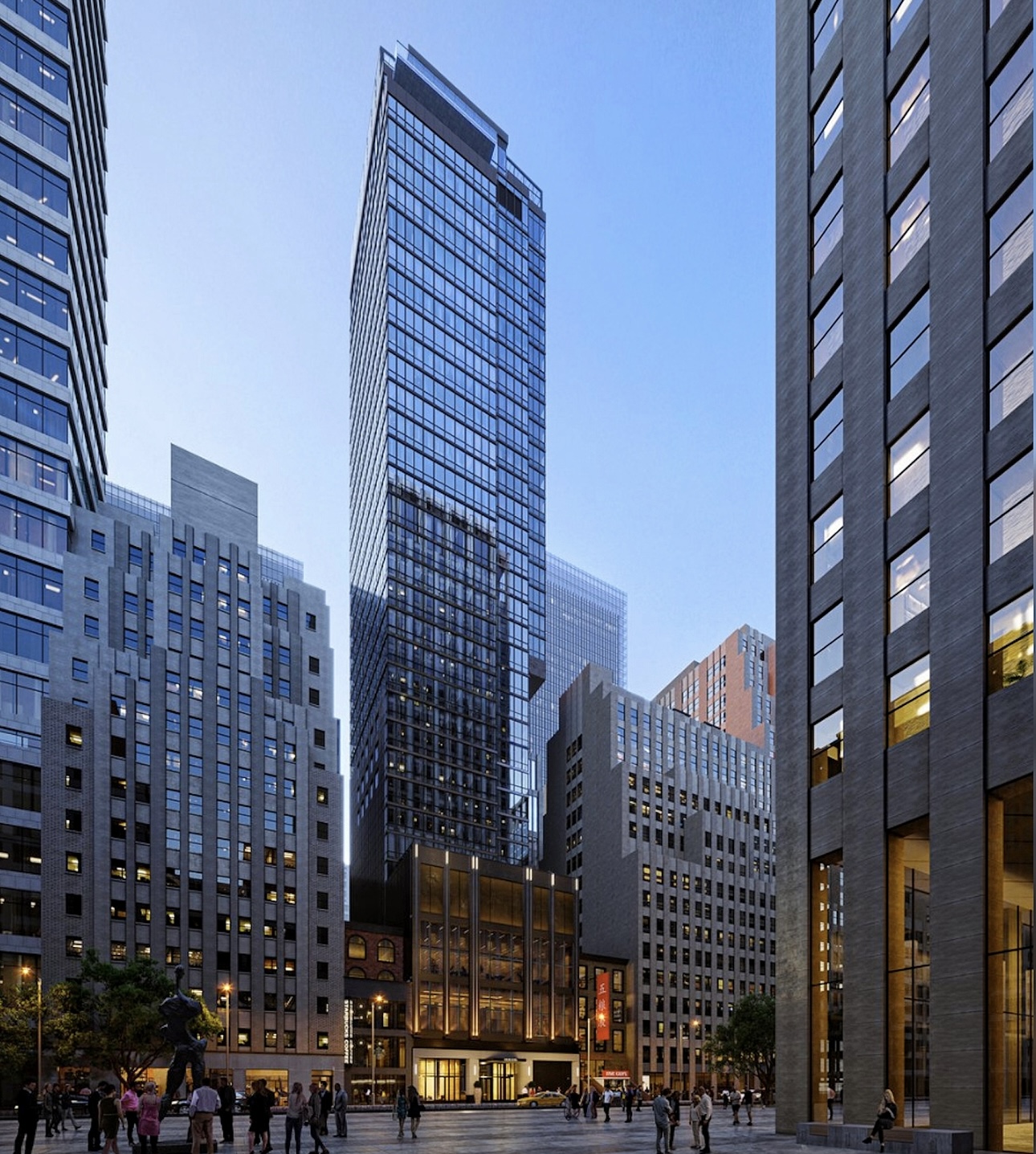
**Location:** Heart of Midtown Manhattan | **Rooms:** 529 | **Opening:** March 2026
The Kimpton Era Midtown is the largest tech-forward hotel opening in NYC for 2026, with 529 guestrooms across a 33-story new-build designed by SLCE Architects and INC Architecture & Design. Founding partner Adam Rolston describes the rooms as **“engineered elegance — compact, crafted, and refined to the luxury of just enough,”** evoking the precision of a first-class ocean liner stateroom.
Every room features integrated smart controls for climate, lighting, and entertainment, with the hotel’s technology infrastructure designed to support 529 simultaneously connected rooms without latency. The property’s four bespoke restaurant concepts by Apicii — including a taqueria, brasserie, coffee shop, cocktail lounge, and elevated izakaya with views of Rockefeller Center and Radio City — all feature digital ordering systems and smart kitchen technology.
The rooftop bar crowns the building with panoramic skyline views and a state-of-the-art sound and lighting system. Kimpton Era proves that technology can scale without losing the boutique sensibility that defines the brand.
---
## 9. Now Now NoHo — The Tech-Enabled Micro-Hotel
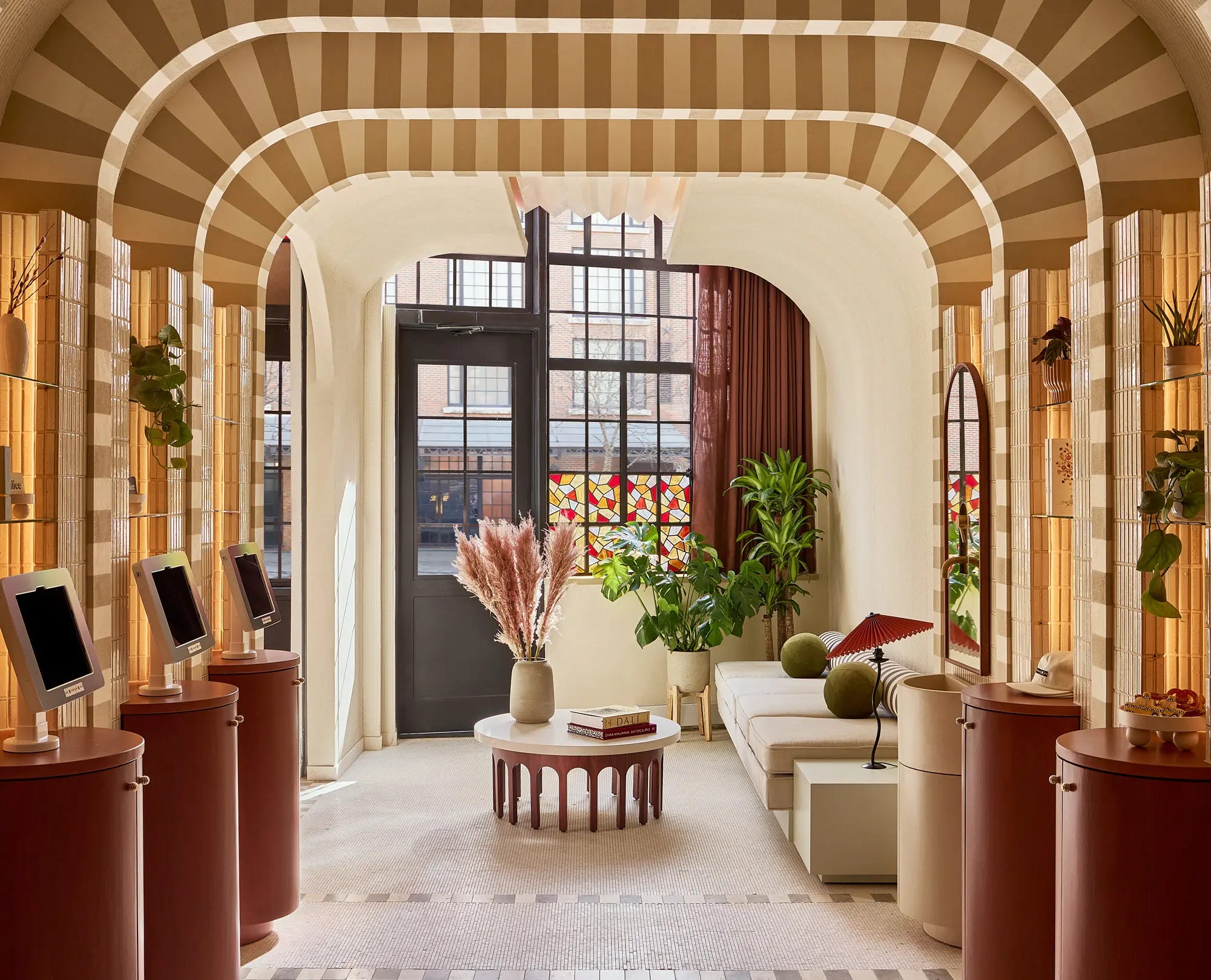
**Location:** Bowery, NoHo | **Category:** Design-Forward Budget | **Opened:** 2026
Now Now NoHo is the most radical rethinking of hotel technology in New York City. The seventh property by Dovetail + Co, designed by local firm Islyn Studio, marries **Japanese capsule hotel efficiency with European train car romance** — all powered by a fully digital guest journey. CEO Phil Hospod calls it “really the first design-forward hostel of its kind in the city.”
The **tech-enabled lobby** serves as the nerve center: self-service digital check-in, smartphone-based room access, and an app that manages everything from housekeeping requests to local recommendations. The capsule-inspired rooms maximize every square inch through motorized storage systems and integrated USB-C charging throughout. Smart lighting adapts to time of day, and noise-canceling technology ensures privacy in the compact quarters.
At a fraction of the price of traditional Manhattan hotels, Now Now NoHo delivers a technology experience that rivals properties charging five times as much. It represents the democratization of smart hospitality.
---
## 10. 1 Hotel Brooklyn Bridge — Sustainable Technology Pioneer
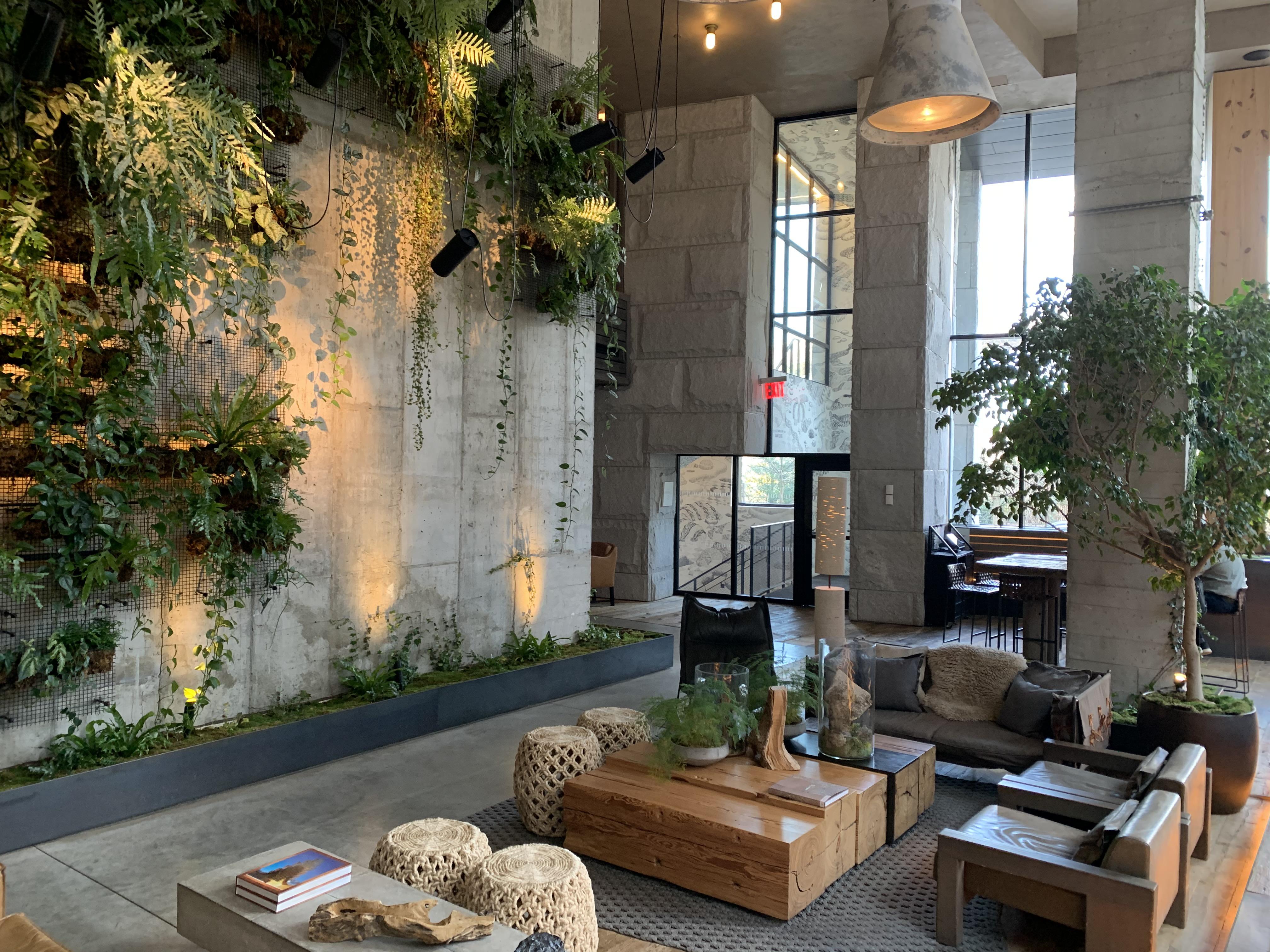
**Location:** Brooklyn Bridge Park, Brooklyn | **Certification:** LEED Gold
1 Hotel Brooklyn Bridge proves that the most impactful hotel technology isn’t always the most visible. Behind the biophilic design — reclaimed wood, living green walls, organic textiles — lies a sophisticated **sustainable technology infrastructure** that earned the property LEED Gold certification.
**Occupancy-based smart thermostats** automatically adjust room temperature when guests leave, reducing energy consumption by up to 30%. State-of-the-art **LED lighting systems** with daylight harvesting sensors optimize natural light usage throughout the day. The hotel’s **energy-efficient HVAC systems** use advanced heat recovery technology to minimize the building’s carbon footprint.
Smart water management systems monitor consumption in real-time, while the property’s building management system (BMS) integrates all environmental controls into a single dashboard that operations teams use to continuously optimize performance. For guests, the technology manifests as rooms that feel naturally comfortable — the temperature is always right, the light is always flattering, and the air is always fresh — without any visible gadgetry.
---
## The Future of Hotel Technology in New York City
These 10 properties represent a fundamental shift in how hotels deploy technology. The era of technology as a novelty — robots for the sake of robots, tablets for the sake of tablets — is giving way to a more sophisticated approach where technology serves specific purposes: enhancing wellness (Equinox), democratizing luxury (citizenM, YOTEL), amplifying art (Faena, M Social), enabling sustainability (1 Hotel), or optimizing compact spaces (Now Now NoHo).
According to BCG’s 2026 hospitality report, AI-first hotels are achieving 15-25% higher guest satisfaction scores and 10-18% improvements in operational efficiency. New York City, with its relentless pace of innovation and demanding clientele, will continue to be the proving ground for the next generation of hotel technology.
For travelers seeking the cutting edge of hospitality innovation, there has never been a better time to book a room in New York City.
---
## FAQ
**Which is the most technologically advanced hotel in NYC?**
Equinox Hotel Hudson Yards offers the most comprehensive smart room technology, with tablet-controlled everything, sleep-optimized room modes, SmartGlass windows, and technology-driven spa treatments.
**Are there affordable tech hotels in New York City?**
Yes. YOTEL NYC (from $208/night), citizenM (multiple locations), and Now Now NoHo offer cutting-edge technology at budget-friendly prices.
**Which NYC hotel has robots?**
YOTEL NYC Times Square features the YOBOT, a robotic luggage handler in the lobby, along with self-service check-in kiosks and motorized SmartBeds.
**What is the newest tech hotel opening in NYC for 2026?**
Kimpton Era Midtown (529 rooms, opening March 2026) is the largest new tech-forward hotel, while Faena New York and Now Now NoHo represent the most innovative new concepts.
**Which NYC hotel is best for sustainability technology?**
1 Hotel Brooklyn Bridge is LEED Gold certified with occupancy-based thermostats, LED daylight harvesting, smart water management, and advanced heat recovery systems.