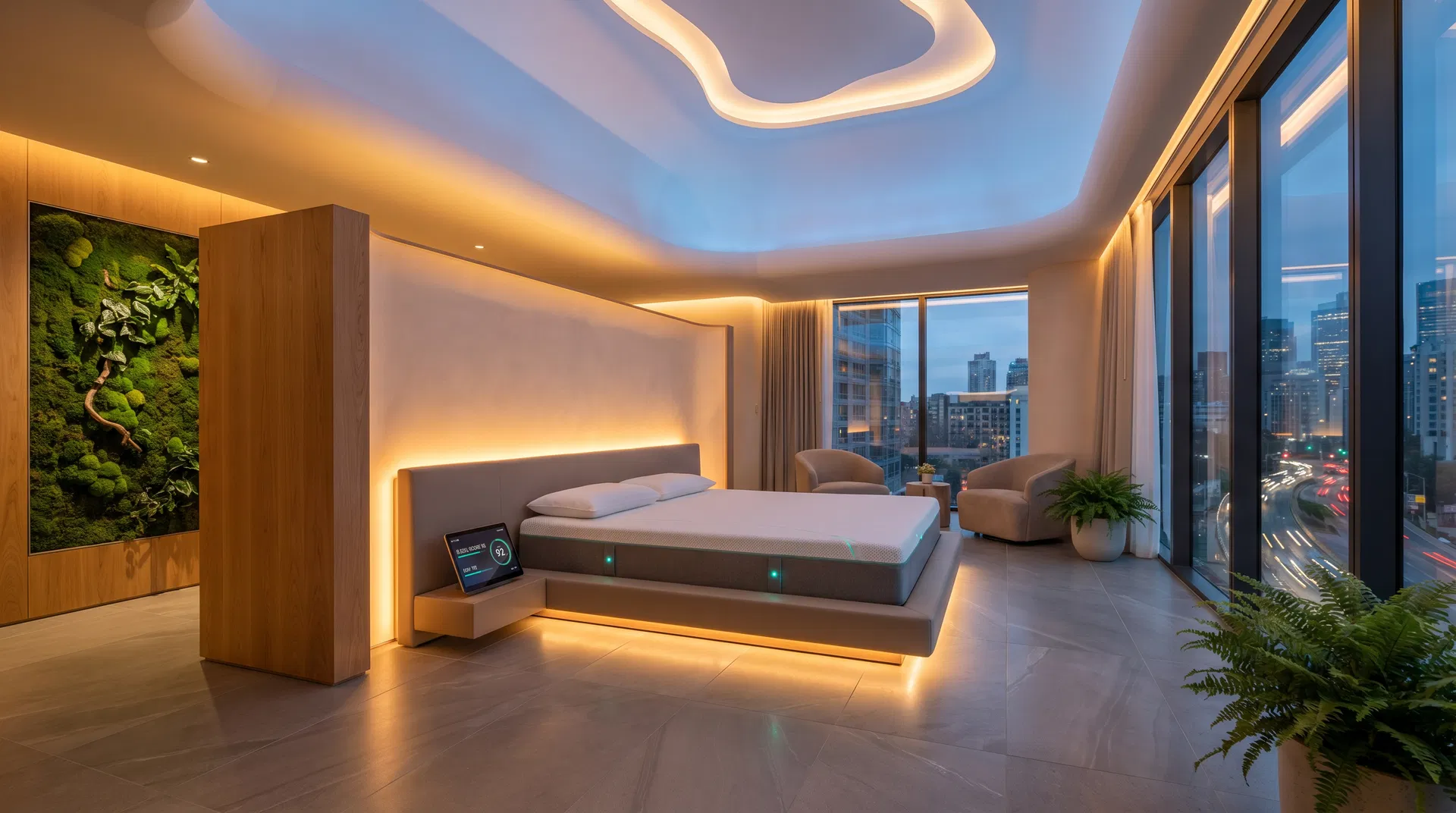
The hospitality industry is undergoing a silent but radical metamorphosis. It's no longer about adding a spa or a vegan menu: in 2026, the world's most innovative hotels are transforming into longevity and scientific wellness hubs, where every element — from lighting to room temperature, from the mattress to the scent in the air — is engineered to optimize the guest's biological health. The sleep tourism market is now worth $96 billion globally and will reach $265 billion by 2034, growing at a compound annual rate of 13.56%. Wellness tourism as a whole has surpassed $1.06 trillion in 2026, with projections reaching $1.54 trillion by 2030. These numbers reveal a truth that many hoteliers still ignore: guests are no longer looking for just a bed — they're looking for a transformation.
The Neuro-Hospitality Revolution: When Design Becomes Therapy
The concept of neuro-hospitality represents the most advanced frontier of hotel innovation. It involves applying neuroscience to the design of hospitality spaces, where every sensory stimulus — visual, olfactory, tactile, acoustic — is calibrated to produce specific neurological responses in the guest. This is no longer about aesthetics: it's human experience engineering.
According to research conducted by Gensler in 2026, the hospitality industry has remained trapped in what researchers call "ocular centrism": space design focuses almost exclusively on visual appearance, treating sound, scent, texture, and taste as secondary elements. This approach ignores decades of neuroscience research demonstrating that the human brain processes the environment in a multisensory and simultaneous manner. Smell, for instance, is the sense most directly connected to memory and emotions, yet most hotels treat it as a marginal detail.
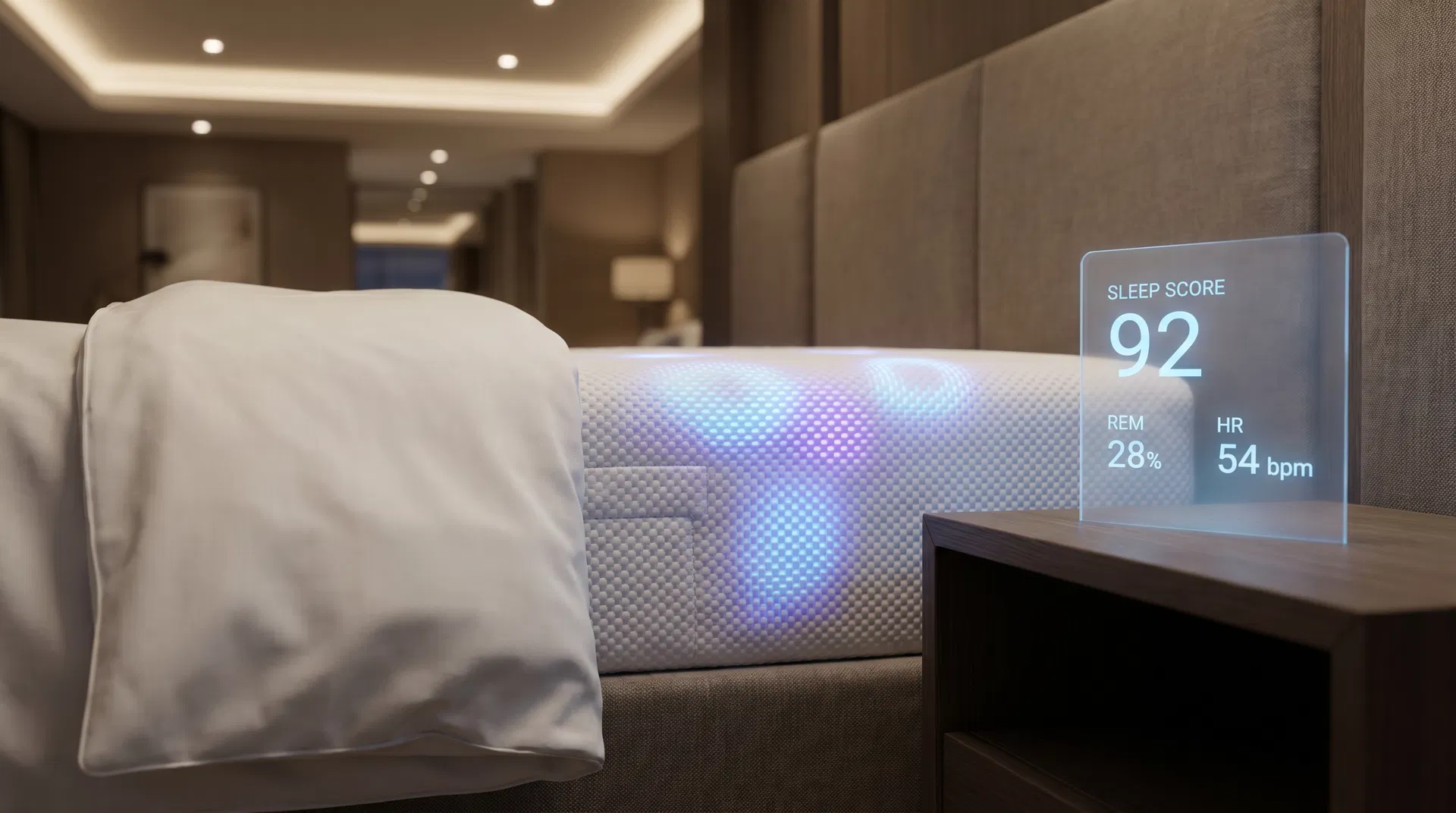
Hotels that have embraced neuro-hospitality are achieving measurable results. The Park Hyatt New York introduced the Bryte Restorative Sleep Suite, equipped with an AI-powered mattress that monitors body pressure, temperature, and guest movements in real time, automatically adjusting the surface throughout the night. The system uses machine learning algorithms to create a personalized sleep profile that improves with each night spent at the property. Preliminary data shows an average 32% improvement in perceived sleep quality among guests.
Sleep Tourism: The $96 Billion Market Redefining Hospitality
Sleep tourism is no longer a niche for biohackers and wellness enthusiasts. It has become a mainstream segment that is reshaping the priorities of the entire hotel industry. The global sleep economy has surpassed $585 billion, and wellness travel providers are increasingly integrating dedicated sleep programs into their offerings.
Equinox Hotels hosted its third annual Global Sleep Symposium in 2026, an event bringing together neuroscientists, sleep coaches, and designers to rethink the very concept of a hotel room. Equinox's Sleep Experience program includes circadian lighting that simulates the natural sunlight cycle, mattresses with active cooling technology, and personalized sleep preparation protocols. Dr. Matthew Walker, neuroscientist at UC Berkeley and author of the bestseller "Why We Sleep," participated as keynote speaker, emphasizing that "the hotel room of the future will not be judged by its design, but by the quality of sleep it produces."
| Hotel | Sleep Program | Key Technology | Starting Price |
|---|---|---|---|
| Equinox Hotels (Global) | Sleep Experience Program | Circadian lighting, cooling mattresses | From $400/night |
| Park Hyatt New York | Bryte Restorative Suite | AI mattress, biometric monitoring | From $1,200/night |
| Grand Resort Bad Ragaz | Medical Sleep Analysis | Clinical video polysomnography | From CHF 2,500/program |
| Zedwell Piccadilly Circus | Sleep Cocoons | Soundproof capsules, purified air | From £120/night |
| Six Senses Ibiza | Sleep Tracker Program | Biohacking, yoga nidra, breathwork | From €450/night |
| Kamalaya Koh Samui | Sleep Enhancement | Naturopathy, TCM, acupuncture | From $3,800/week |
| BodyHoliday Saint Lucia | Ayurvedic Sleep Program | Soundproof walls, pillow menu | From $550/night |
The Grand Resort Bad Ragaz in Switzerland has taken the concept to a clinical level, offering video polysomnography — the same diagnostic examination used in hospital sleep laboratories — within a five-star luxury hotel setting. Guests receive a comprehensive analysis of sleep stages, breathing disorders, and periodic limb movements, followed by a personalized treatment plan that may include cognitive behavioral therapy for insomnia, chronobiology, and nutritional interventions.
At the opposite end of the price spectrum, Zedwell Piccadilly Circus in London has created an accessible sleep tourism model: windowless, fully soundproofed rooms with purified air and premium Hypnos mattresses. The concept demonstrates that sleep tourism is not exclusively a luxury product — it can be democratized while maintaining scientific effectiveness.
From Hotels to Longevity Clinics: The Convergence That Changes Everything
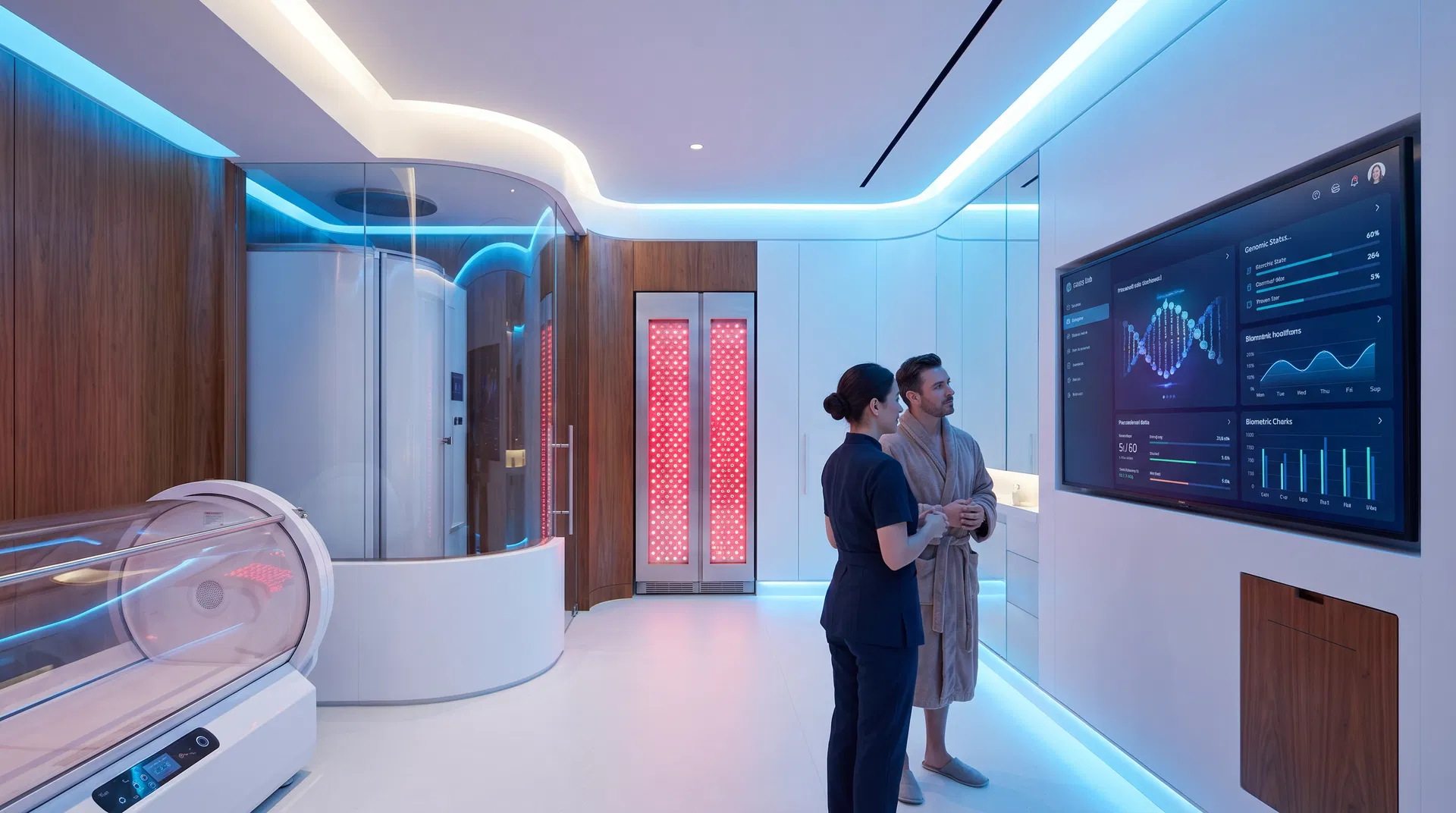
The most disruptive trend of 2026 is the convergence between luxury hospitality and preventive medicine. Hotels are no longer limited to offering spa treatments: they are integrating advanced medical diagnostics, evidence-based longevity protocols, and cellular regeneration technologies. The longevity retreat market has reached $11.08 billion in 2026, with an annual growth rate of 12.9%.
Clinique La Prairie, the Swiss institution founded in 1931 and a pioneer in anti-aging medicine, has opened its first longevity hub within the One&Only Za'abeel Dubai. The program offers genomic analysis, epigenetic testing, stem cell therapies, and personalized regeneration protocols, all integrated into the experience of staying at an ultra-luxury hotel. The model represents a paradigm shift: the hotel is no longer the container of the wellness experience — it becomes a medical infrastructure itself.
The Longevity Health & Wellness Hotel in Algarve, Portugal, has developed a similar but more accessible approach, combining preventive diagnostics with holistic wellness programs. Guests can undergo complete medical check-ups, microbiome analysis, oxidative stress tests, and body composition assessments, receiving a personalized intervention plan that integrates nutrition, movement, stress management, and sleep optimization.
Multisensory Design: The New Frontier of Hotel Architecture
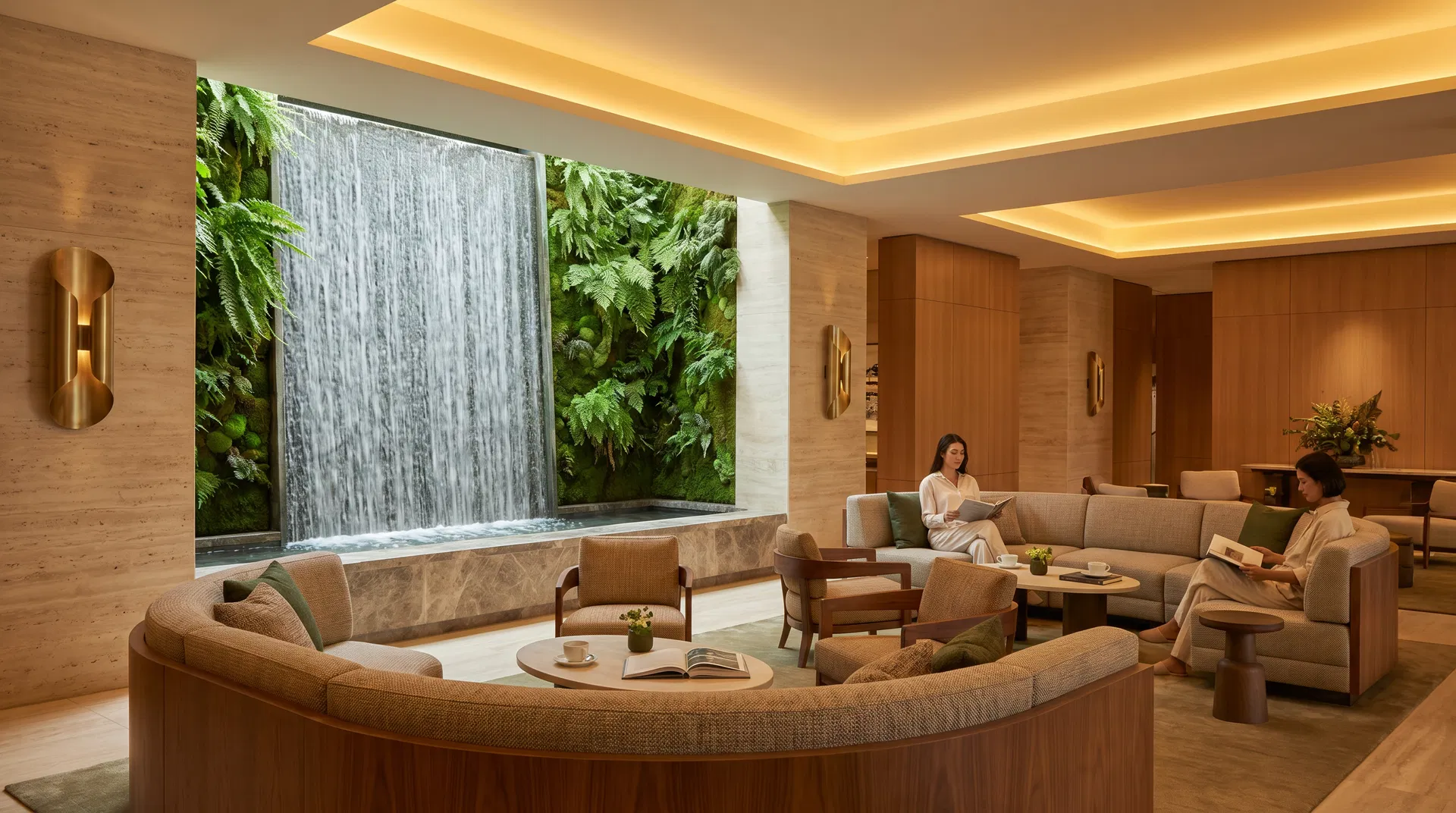
Gensler's research involved 12 international practitioners specializing in sound, light, texture, color, and neurodiversity, developing a framework for crafting coherent, inclusive, and brand-specific atmospheres. Multisensory design is not embellishment: it is spatial infrastructure that determines how the guest's brain perceives, processes, and remembers the experience.
The practical applications are remarkable. Olfactory personalization allows guests to select their room's aromatic profile through an app, choosing from combinations designed to promote relaxation, concentration, or energy. Some hotels are experimenting with adaptive soundscapes that change based on time of day, occupancy levels in common areas, and even external weather conditions, creating an acoustic environment that the brain perceives as natural and reassuring.
Circadian lighting represents perhaps the intervention with the greatest scientific impact. Light is the primary regulator of the human circadian rhythm, and lighting designed to follow the natural cycle — blue-white light in the morning to stimulate cortisol and wakefulness, warm amber light in the evening to promote melatonin production — can significantly improve sleep quality, mood, and even immune function in guests.
The Integrated Recovery Ecosystem: The Six-Pillar Model
The most innovative concept to emerge in 2026 is the Integrated Recovery Ecosystem, a model that transforms the traditional spa into a scientific infrastructure organized into six interconnected functional zones. Unlike the traditional model based on single sessions (a massage, a facial), this approach sells measurable biological outcomes through cumulative protocols where each zone prepares the body for the next.
| Zone | Function | Technology | Key Benefit |
|---|---|---|---|
| Body Remodeling | Fascial stimulation and lymphatic drainage | Robotic micro-alveolar stimulation | Precision beyond manual massage |
| Thermal & Metabolic Detox | Metabolic activation and detoxification | Japanese black carbon technology | Deep detoxification and longevity |
| Pelvic Health & Neuro-Fitness | Functional training with magnetic stimulation | Functional Magnetic Stimulation (FMS) | Medical-grade fitness in total privacy |
| Performance & Muscle Recovery | Pain management and tissue regeneration | Medical acoustic wave technology | Specialized sports-medical destination |
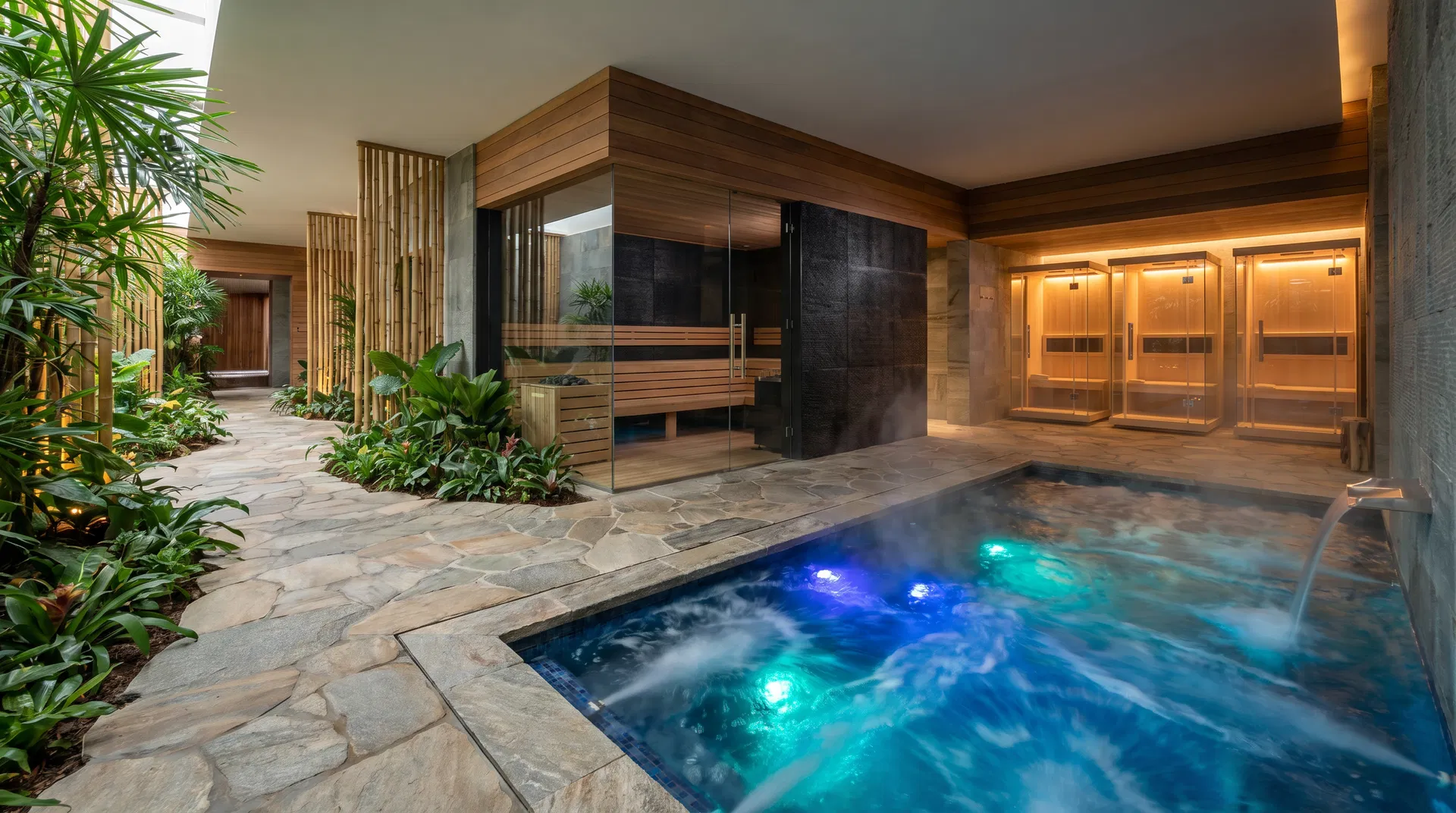
| Smart Hydro-Recovery | Nervous system balance | Programmed aquatic protocols | Deep muscular and nervous relaxation |
| Bio-Regeneration | Cellular repair and energy boost | Oxygen therapy and bio-light | Final phase of integrated protocols |
The operational advantage of this model is significant. Technology replaces the labor-intensive manual work of the traditional spa model, ensuring consistent and predictable quality regardless of the therapist's skill level or fatigue. Staff transition from "manual executors" to "system supervisors," drastically reducing training and management costs. Every square meter becomes an active revenue-generating unit, with significantly higher throughput (guests per hour) compared to traditional manual massage sessions.
Artificial Intelligence at the Service of Wellness
AI is no longer limited to customer service chatbots. In 2026, artificial intelligence has become the central nervous system of wellness-oriented hotels. Hilton's AI concierge uses predictive algorithms to anticipate guest needs before they're even expressed, suggesting wellness treatments based on travel profile, dietary preferences, and even biometric data collected (with consent) during the stay.
AI-powered mattresses represent the most tangible application. The Bryte Balance system, adopted by Park Hyatt, uses pressure sensors distributed across the entire mattress surface to create a real-time thermal map of the body. When the system detects an excessive pressure point — typically on the shoulders or hips — it automatically adjusts the firmness of that specific zone without waking the guest. The result is an average 40% reduction in nighttime awakenings and a 25% increase in time spent in deep sleep stages.
Some hotels are experimenting with wellness digital twins: personalized digital models that aggregate sleep, physical activity, nutrition, and stress data to create a holistic guest profile. This profile is used to personalize every aspect of the stay, from room temperature to the music playlist, from the restaurant menu to recommended treatments.
Regenerative Tourism: Beyond Personal Wellness
The most significant trend for the future is the convergence between personal wellness and environmental sustainability. The most visionary hotels are developing programs that not only improve guest health but actively regenerate the local ecosystem. The concept of regenerative tourism goes beyond simple carbon neutrality: the goal is to leave the destination in better condition than before the guest's arrival.
This convergence manifests in programs that combine wellness activities with nature connection experiences: forest bathing guided by neuroscientists, meditation in protected ecosystems, nutrition based on local agrobiodiversity products. Agrobiodiversity has been identified by the Global Wellness Summit as the next major wellness trend, with hotels creating medicinal gardens, guided harvesting programs, and therapeutic menus based on indigenous plant varieties.
What This Means for Hoteliers
The transformation underway is not a passing trend: it is a structural change in how guests evaluate and choose accommodations. Hotels that ignore this evolution risk finding themselves in the same position as hotel chains that in the 2010s underestimated the impact of Airbnb.
The investment doesn't necessarily have to be massive. The integrated recovery ecosystem is designed as a scalable modular system: a hotel can start with two or three strategic zones, validate the return on investment, and measure guest response before expanding. The key is to start with a clear vision and an evidence-based approach, not following the trend of the moment.
The data speaks clearly: the hotel wellness market will grow at 9.7% annually through 2030, sleep tourism at 13.56% through 2034, and longevity retreats at 12.9%. Hotels that can position themselves at the intersection of these three trends — sleep, longevity, and multisensory design — will not only survive the next wave of disruption but will lead it.