Best New Hotel Openings in Asia 2026: How Technology, Design and Innovation Are Redefining Luxury Hospitality
From Tokyo to Singapore, the Maldives to Kyoto: the most anticipated hotel openings of 2026 in Asia are redefining luxury through biophilic design, AI concierge systems, smart rooms and sustainability.
Futuro del Travel
World Hotel Journal Editorial
## Executive Summary
The year 2026 marks a watershed moment for Asia's hospitality industry. A new generation of luxury hotels is emerging across the continent, redefining the boundaries between technology, design and sustainability. These are no longer simply about elegant rooms and impeccable service: the properties opening this year represent genuine innovation laboratories where artificial intelligence meets local craftsmanship, biophilic design merges with cutting-edge architecture, and smart room technology fundamentally transforms the guest experience.
According to a recent STR Global report, the smart hotel management platforms market reached a value of USD 12.91 billion in 2025, with projected annual growth of 7.89% through 2033. The Asia-Pacific region is leading this transformation, with record investments in AI technology, IoT and integrated sustainability solutions. In this article, we analyse the most significant openings of 2026, exploring how each property is contributing to the evolution of luxury hospitality.
## 1 Hotel Tokyo: A Biophilic Sanctuary in the Heart of the Metropolis
The first opening demanding attention is undoubtedly **1 Hotel Tokyo**, which opened in March 2026 within the Akasaka Trust Tower. With 211 rooms designed according to biophilic principles, this property represents the debut of the 1 Hotels brand in Japan, born from a collaboration between hospitality visionary Barry Sternlicht and Mori Trust, one of Japan's leading real estate developers.
The hotel distinguishes itself through the integration of **smart efficiency systems** and advanced water conservation measures. Each room is a tribute to Japanese craftsmanship, featuring reclaimed materials, curated greenery and tactile details that create an atmosphere of calm contemplation. Panoramic views of the Imperial Palace, Tokyo Tower and the city skyline complete an experience that Barry Sternlicht describes as "capturing that harmonious tranquillity I have always admired in Japanese gardens and parks."
From a technological standpoint, 1 Hotel Tokyo implements an **AI-based energy management system** that optimises each room's consumption in real time based on occupancy and guest preferences. IoT sensors monitor air quality, natural lighting and temperature, automatically adjusting the environment to maximise comfort while minimising environmental impact.
## Capella Kyoto: Where Tradition Meets Contemporary Design
**Capella Kyoto** opens in spring 2026 in the historic Miyagawa-cho district, within walking distance of Kenninji, Kyoto's oldest Zen temple. With 89 rooms designed by **Kengo Kuma and Associates** in collaboration with Singapore-based **Brewin Design Office**, this property represents a masterpiece of integration between tradition and modernity.
The inspiration comes from machiya, Kyoto's traditional townhouses. Guests are welcomed through a Gion-style alleyway lined with shoji screens before reaching rooms that include six suites fitted with **private onsens**. The tatami-infused suites feature garden courtyards inspired by Zen philosophy and locally crafted wood detailing.
The **Capella Curate** programme offers immersive cultural experiences: visits to a 150-year-old atelier that produces geta (traditional wooden sandals) and intimate maiko performances. This attention to hyper-local storytelling represents one of the most significant trends in 2026 hospitality, where luxury is no longer synonymous with global uniformity but with territory-rooted authenticity.
Technology here is discreet yet sophisticated: a **multilingual AI digital concierge** assists guests in planning cultural experiences, while intelligent climate control systems maintain the perfect balance between modern comfort and traditional Japanese aesthetics.
## NoMad Singapore: Hilton's Biophilic Luxury APAC Debut
**NoMad Singapore** represents the Asia-Pacific debut of this luxury lifestyle brand from the Hilton group. Scheduled for the third quarter of 2026, the 173-room property rises on iconic Orchard Road, on the site of the former Faber House, and is managed by Singapore's UOL Group (which also owns the Pan Pacific and Parkroyal Collection brands).
The most spectacular architectural element is a **biophilic waterfall cascading across 15 storeys**, destined to become a visual landmark in the heart of the shopping district. NoMad is renowned for its focus on art: each room will feature works by local artists, creating a continuous dialogue between hospitality and contemporary culture.
The property includes an **infinity pool overlooking Orchard Road**, a rooftop bar and restaurant, and a public urban verandah dedicated to art and design programming, in synergy with the neighbouring Design Orchard. NoMad Singapore's smart room technology integrates **AI voice assistants** for environmental control, contactless check-in systems and a personalised digital platform that learns guest preferences throughout their stay.
## The Langham, Custom House, Bangkok: The Year's Most Anticipated Opening
Winner of the **"Asia's Most Anticipated Hotel Opening 2026"** award at LuxeAsia, **The Langham, Custom House, Bangkok** brings the British brand's luxury heritage to the heart of the Thai capital. The property distinguishes itself through its holistic approach to wellness, featuring the renowned **Chuan Spa**, two outdoor pools, a fitness centre with daily classes and a wellness programme that integrates traditional Thai practices with modern technologies.
The hotel implements a **machine learning-based intelligent booking management system** that optimises room distribution and personalises offers based on each guest's behavioural profile. The **dynamic revenue management** platform uses predictive algorithms to adjust prices in real time, analysing over 200 variables including local events, weather, tourist flows and booking trends.
## Bulgari Resort Ranfushi: Mediterranean Minimalism in the Maldives
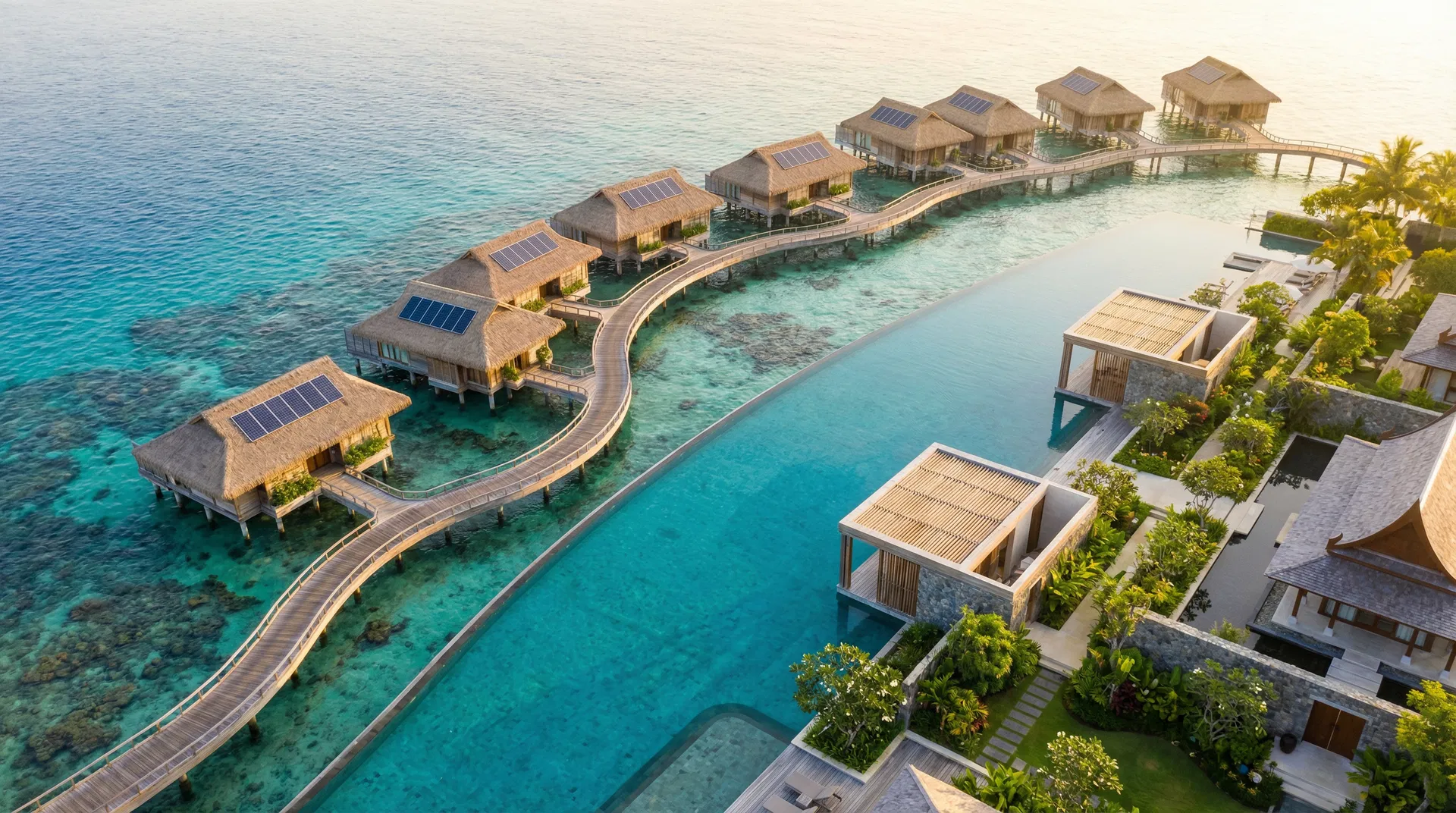
**Bulgari Resort Ranfushi**, expected in 2026 in the Raa Atoll of the Maldives, represents the Italian brand's first foray into the archipelago. Designed by **ACPV Architects** (Antonio Citterio Patricia Viel), the resort blends Roman sophistication with the crystalline beauty of the Indian Ocean.
**Low-density master planning** ensures maximum privacy, with overwater and beachfront villas characterised by sculptural, restrained forms. Italian marble and bespoke furnishings are juxtaposed with local timber, while expansive glazing dissolves the boundaries between architecture and lagoon. The Bulgari Spa, yoga pavilion and La Galleria boutique complete an offering that redefines tropical luxury.
From a technological perspective, the resort implements **100% renewable energy infrastructure**, with solar panels integrated into the architecture and low-impact desalination systems. Each villa is equipped with a comprehensive home automation system controllable via tablet or voice commands.
## Taj Paro Resort & Spa: Sustainable Luxury in the Kingdom of Bhutan
Inaugurated in March 2026, the **Taj Paro Resort & Spa** is located in Paro Valley, with spectacular views of the Tiger's Nest monastery. The 45 rooms are constructed using **local stone and reclaimed wood**, in perfect harmony with the surrounding environment and the Bhutanese philosophy of Gross National Happiness.
This property represents an emblematic example of how technology can serve sustainability without compromising authenticity. **Geothermal heating** systems and intelligent water management solutions reduce environmental impact, while Starlink connectivity ensures guests have reliable digital access even in one of Asia's most remote locations.
## Chatrium Rawai Phuket: Technology Meets the Andaman Sea
**Chatrium Rawai Phuket**, scheduled for the second quarter of 2026, marks Thai hospitality group Chatrium's debut in Phuket. With 304 rooms and 8 pool villas, the property faces the Andaman Sea and offers an experience combining beach luxury with technological innovation.
The resort implements a **fully automated self check-in system**, room service robots and an AI-based water activities management platform that suggests personalised experiences based on weather conditions and guest preferences.
## Technology Trends Defining 2026
Analysis of these openings reveals five macro-trends redefining luxury hospitality in Asia.
### AI Concierge and Predictive Personalisation
According to a Phocuswire report, the era of **Agentic AI** is transforming hospitality beyond simple chatbots. Next-generation AI concierge systems, such as those developed by Aiello, offer personalised real-time voice assistance, automating operations and anticipating guest needs before they are even expressed.
### Integrated Smart Rooms and IoT
The smart rooms of 2026 go far beyond smartphone-controlled lighting. Environmental sensors, adaptive air purification systems, interactive mirrors and multilingual voice assistants create a digital ecosystem that continuously adapts to individual preferences.
### Biophilic Design as Standard
No longer a niche, **biophilic design** has become the dominant architectural language of luxury hospitality. From NoMad Singapore's 15-storey waterfall to 1 Hotel Tokyo's natural materials, connection with nature is now a fundamental requirement.
### Regenerative Sustainability
The properties of 2026 are not merely reducing their impact: they aspire to leave the environment in better condition than they found it. Renewable energy infrastructure, local materials, biodiversity conservation and circular economy practices are now integrated into design from the foundations up.
### Hyper-Local Storytelling
Uniform global luxury is giving way to experiences deeply rooted in place. From Capella Kyoto's Curate programme to Taj Paro's Bhutanese practices, each property tells a unique and unrepeatable story.
## Strategic Recommendations for Operators
For hotel operators seeking to remain competitive in this rapidly evolving landscape, several key recommendations emerge.
First, **investing in AI concierge platforms** is no longer optional but necessary. The smart hotel platforms market will reach USD 24 billion by 2033, and early adopters are already recording 15-25% increases in guest satisfaction.
Second, **biophilic design** must be integrated from the design phase, not added as a decorative element. Properties adopting this approach record occupancy rates 12% higher than traditional competitors.
Finally, **sustainability must be measurable and communicable**. Luxury segment guests are increasingly attentive to environmental impact and reward properties that can concretely demonstrate their commitment through certifications, sustainability reports and transparent practices.
The year 2026 is not simply a year of new openings: it is the year in which luxury hospitality in Asia redefines its standards, placing technology, design and sustainability at the centre of an experience that aspires to transform not only the guest stay, but the very future of the industry.