10 Innovations Transforming the Hotel Industry in 2026
From AI-powered concierges and biometric check-in to service delivery robots and digital twins, the hotel industry is undergoing its most radical technological transformation in decades. Discover the ten innovations redefining how hotels operate, compete, and deliver unforgettable guest experiences in 2026.
Tecnologia Alberghiera
World Hotel Journal Editorial
## The Hospitality Industry's Great Technological Leap
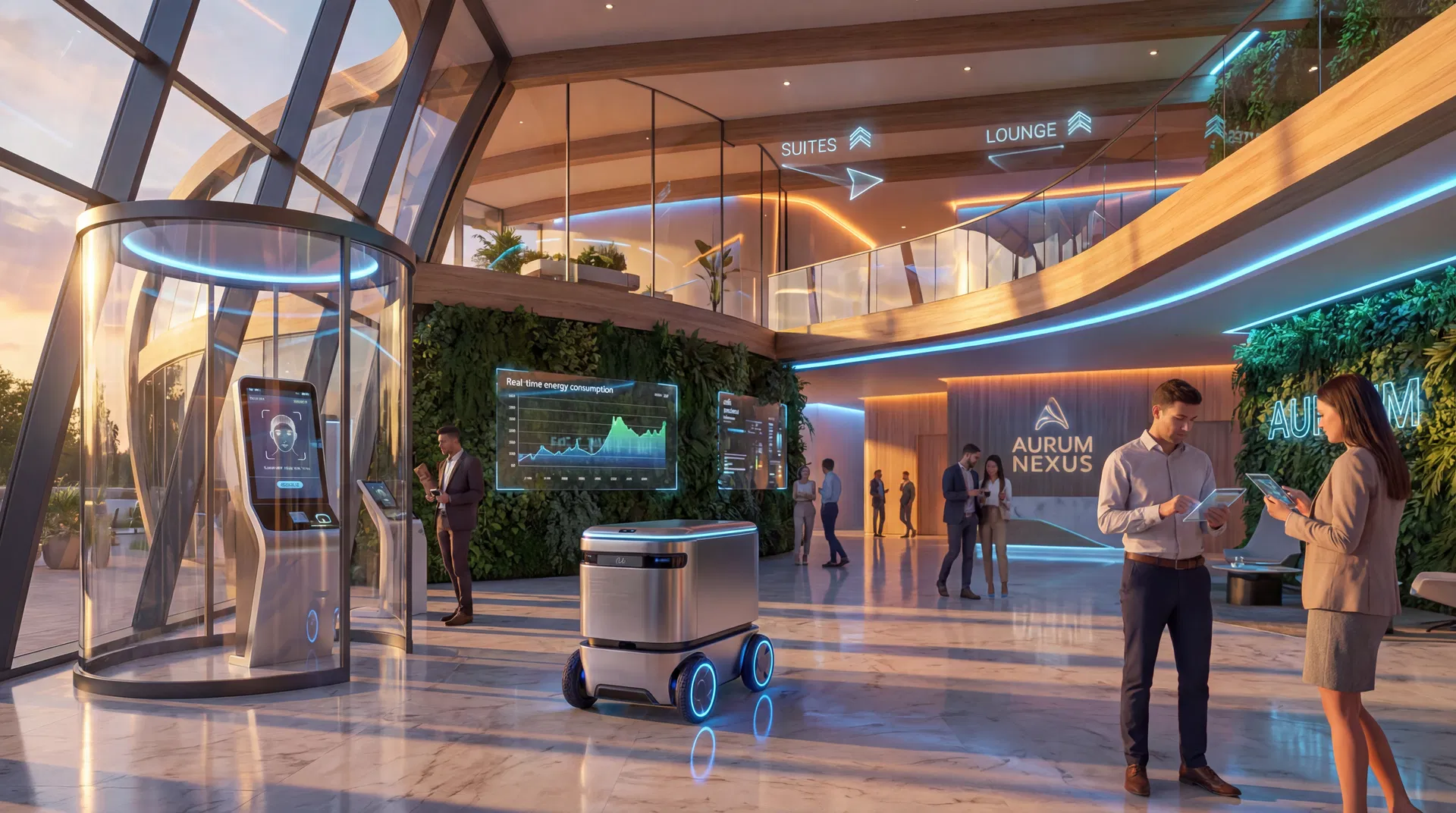
The hotel industry in 2026 is experiencing what many analysts are calling its **most significant transformation since the invention of online booking**. A convergence of artificial intelligence, robotics, biometrics, and sustainable technology is fundamentally reshaping every aspect of hotel operations — from how guests check in to how buildings manage their own energy consumption.
The numbers are staggering. According to Canary Technologies' 2026 State of AI in Hospitality report, **82% of hoteliers are actively expanding their AI investments** this year. The hospitality robotics market reached **$610 million in 2025** and is projected to grow to **$1.84 billion by 2030**, according to FieldNation. Meanwhile, **Marriott International has committed $1.1 billion in total investment spending for 2026**, with 35-40% dedicated to digital transformation and AI.
But this transformation extends far beyond artificial intelligence alone. From biometric authentication to blockchain-powered loyalty programs, the innovations reshaping hospitality are diverse, interconnected, and accelerating at unprecedented speed. Here are the **ten innovations that are defining the hotel industry in 2026**.
---
## 1. AI-Powered Concierge and Virtual Assistants
The first and most visible innovation is the rise of **AI-powered concierge systems** that can handle complex guest requests in natural language, across multiple languages, 24 hours a day. Unlike the rudimentary chatbots of previous years, today's AI concierges leverage large language models capable of understanding context, remembering guest preferences, and making personalized recommendations.
**Hilton's "Connie"** AI concierge, powered by IBM Watson, has evolved into a sophisticated system that handles over **60% of routine guest inquiries** without human intervention. At the **Cosmopolitan of Las Vegas**, the AI concierge "Rose" processes thousands of guest requests daily, from restaurant reservations to personalized activity recommendations, with a guest satisfaction score that rivals human concierges.
The impact on operations is measurable: hotels deploying advanced AI concierges report a **35% reduction in front desk call volume** and a **22% increase in ancillary revenue** from AI-driven upselling and cross-selling recommendations.
---
## 2. Biometric Check-In and Facial Recognition
The traditional hotel check-in — queuing at the front desk, presenting identification, signing forms — is rapidly becoming obsolete. **Biometric check-in systems** using facial recognition, fingerprint scanning, and even iris detection are transforming the arrival experience into a seamless, contactless process that takes seconds rather than minutes.
The **Marriott Bonvoy app** now supports facial recognition check-in at select properties in Asia, allowing guests to bypass the front desk entirely. In Japan, the pioneering **Henn-na Hotel** chain has used facial recognition as its primary check-in method since its early days, and the technology has matured dramatically. China's **Huazhu Group**, operating over 9,000 hotels, has deployed facial recognition across its entire portfolio, processing millions of check-ins annually.
The biometrics in hospitality market is growing rapidly, driven by guest demand for **frictionless experiences** and hotel operators' need to reduce labor costs at the front desk. Properties using biometric check-in report **average check-in times under 30 seconds**, compared to 5-8 minutes for traditional processes.
---
## 3. Smart Room Technology and IoT Integration
The **smart hotel room** has evolved from a luxury novelty to a mainstream expectation. In 2026, leading hotel brands are deploying rooms equipped with interconnected IoT sensors, voice-activated controls, and AI-driven personalization that automatically adjusts the environment to each guest's preferences.
**Hilton's Connected Room** platform, now deployed across hundreds of properties, allows guests to control lighting, temperature, television, and curtains through the Hilton Honors app or voice commands. The system remembers preferences across stays, so a guest who prefers the room at 19°C with warm lighting will find their room pre-configured upon arrival at any Connected Room property worldwide.
**citizenM Hotels** has taken the concept further with its MoodPad tablet, which gives guests one-touch control over every aspect of their room environment, from window blinds to ambient sound. The result is a **15% increase in guest satisfaction scores** and a **12% reduction in energy consumption** through intelligent climate management.
---
## 4. Service Delivery Robots
Hotel robots have moved decisively beyond the novelty phase. The **hospitality robotics market**, valued at $610 million in 2025, is experiencing explosive growth as hotels deploy autonomous machines for room service delivery, luggage transport, cleaning, and even food preparation.
**Aloft Hotels'** robot butler "Botlr" delivers amenities directly to guest rooms, navigating elevators and hallways autonomously. The **Henn-na Hotel** in Nagasaki operates with a staff that includes robotic receptionists, porter robots, and an in-room assistant. At **Yotel New York**, the "Yobot" robotic luggage handler stores and retrieves guest bags from a secure automated system.
As reported by Forbes in March 2026, robots are increasingly handling **food and beverage delivery**, with autonomous systems capable of delivering room service orders from kitchen to guest room in under 8 minutes. Hotels deploying service robots report a **28% reduction in delivery times** and significant labor cost savings, particularly during overnight shifts when staffing is most challenging.
---
## 5. Digital Twins for Energy Management
One of the most impactful yet least visible innovations is the adoption of **digital twin technology** for hotel energy management. A digital twin is a virtual replica of a physical building that uses real-time sensor data and AI algorithms to optimize energy consumption, predict maintenance needs, and reduce operational costs.
A landmark case study from a **New York City hotel** using Akila3D's digital twin platform demonstrated savings of **97,300 kWh of energy** through AI-driven optimization of HVAC, lighting, and water systems. The system continuously monitors hundreds of data points across the building, identifying inefficiencies and automatically adjusting systems to maintain guest comfort while minimizing waste.
**Radisson Hotel Group** launched its global **Verified Net Zero program** at IHIF 2026, using digital twin technology as a cornerstone of its sustainability strategy. The program combines real-time energy monitoring, AI-driven optimization, and carbon offset verification to achieve measurable net-zero operations across participating properties.
For hotel operators, digital twins represent a **15-25% reduction in energy costs** — a significant impact given that energy typically represents 6-8% of a hotel's total operating expenses.
---
## 6. Predictive Revenue Management Systems
Revenue management has undergone a **quantum leap** with the integration of AI and machine learning. Modern predictive revenue management systems analyze hundreds of data signals simultaneously — booking pace, competitor rates, local events, weather forecasts, flight data, social media sentiment — to optimize pricing in real time with a precision that was impossible just two years ago.
According to Boston Consulting Group's March 2026 report, hotels using AI-powered revenue management have achieved **RevPAR increases of 8-15%** compared to properties relying on traditional methods. The systems don't just react to demand changes; they **predict them days or weeks in advance**, allowing hotels to adjust pricing, inventory allocation, and marketing spend proactively.
**IDeaS Revenue Solutions** and **Duetto** are leading this transformation, with platforms that process millions of data points per property per day. The most advanced systems now incorporate **demand elasticity modeling**, which calculates the precise price point that maximizes total revenue rather than simply filling rooms.
---
## 7. Hyper-Personalization Engines
The era of one-size-fits-all hospitality is definitively over. **Hyper-personalization engines** powered by AI are creating individualized guest experiences at scale, using data from previous stays, loyalty profiles, social media activity, and real-time behavioral signals to tailor every touchpoint of the guest journey.
**Four Seasons Hotels** has deployed an AI-driven personalization platform that creates **dynamic guest profiles** evolving throughout each stay. If a guest orders a specific wine at dinner, the system notes the preference and ensures it's available at their next property visit. If they use the spa on the second day of every trip, the system proactively suggests booking before arrival.
The impact is substantial. Hotels with advanced personalization report **23% higher guest satisfaction scores**, **18% increases in repeat bookings**, and **31% higher ancillary spend per guest**. In an industry where acquiring a new guest costs 5-7 times more than retaining an existing one, hyper-personalization is not just a luxury — it's an economic imperative.
---
## 8. Mobile-First Guest Journey
The smartphone has become the **universal remote control** for the hotel experience. In 2026, leading hotel brands offer complete mobile-first guest journeys that encompass booking, check-in, room access, in-room controls, service requests, dining orders, and check-out — all from a single app.
**Marriott's Bonvoy app** now functions as a comprehensive travel companion, with mobile check-in available at over 6,000 properties worldwide and **digital key access** at more than 4,000 locations. **Hyatt** has integrated mobile ordering for food and beverage across its portfolio, allowing guests to order from any restaurant or bar on property directly from their phone.
The shift to mobile-first is driven by guest demand: **73% of travelers** now prefer to use their smartphone for hotel interactions rather than visiting the front desk, according to a 2026 Oracle Hospitality survey. Hotels that have fully embraced mobile-first report **40% faster check-in times**, **25% higher F&B revenue** from mobile ordering, and **significantly higher loyalty program engagement**.
---
## 9. Blockchain for Loyalty Programs and Secure Payments
**Blockchain technology** is quietly revolutionizing hotel loyalty programs and payment systems. Traditional loyalty programs suffer from fragmentation, opaque point valuations, and limited redemption options. Blockchain-based systems offer **transparent, transferable, and instantly redeemable** reward tokens that guests can use across multiple brands and partners.
**Singapore Airlines' KrisPay** and **Winding Tree** are pioneering blockchain-based travel loyalty platforms that allow seamless point transfers between airlines, hotels, and experience providers. Several luxury hotel groups are piloting **NFT-based membership programs** that grant exclusive access to properties, events, and experiences.
On the payment side, blockchain enables **instant settlement** between hotels, OTAs, and payment processors, reducing transaction costs by up to **3-5%** and eliminating the reconciliation delays that plague traditional payment systems. For international travelers, cryptocurrency payment options are expanding, with properties in Dubai, Singapore, and Tokyo leading adoption.
---
## 10. Sustainable Technology and Net-Zero Systems
The final innovation is perhaps the most consequential for the industry's long-term future. **Sustainable technology** — encompassing smart HVAC systems, water recycling, solar integration, AI-driven energy optimization, and carbon tracking — is transforming hotels from environmental liabilities into models of operational efficiency.
**Radisson Hotel Group's Verified Net Zero program**, unveiled at IHIF 2026, represents the industry's most ambitious sustainability commitment, combining digital twin monitoring, renewable energy procurement, and verified carbon offsets. **IHG Hotels & Resorts** has deployed AI-powered energy management across 1,000+ properties, achieving average energy reductions of **25%** without impacting guest comfort.
The business case is compelling: sustainable hotels report **lower operating costs** (energy savings of 15-30%), **higher guest satisfaction** (72% of travelers prefer eco-friendly hotels according to Booking.com's 2026 Sustainable Travel Report), and **premium pricing power** (guests are willing to pay 10-15% more for verified sustainable properties).
---
## The Convergence Effect: Why These Innovations Matter Together
The true power of these ten innovations lies not in any single technology, but in their **convergence**. A guest arriving at a forward-thinking hotel in 2026 might check in via facial recognition, enter their AI-personalized smart room with a digital key, order room service delivered by a robot, and check out through a blockchain-verified loyalty system — all while the building's digital twin optimizes energy consumption in real time.
As HospitalityNet's March 2026 analysis concluded, the competitive gap in hospitality will not be determined by who has the most technology, but by who has the **most connected technology**. Hotels that integrate these innovations into unified ecosystems will deliver superior guest experiences, operate more efficiently, and generate higher returns than those managing disconnected point solutions.
The hotel industry's great technological leap is not coming. **It is already here.** The only question is which hotels will lead the transformation and which will be left behind.
---
**FAQ**
**What are the biggest hotel technology innovations in 2026?**
The ten most transformative innovations include AI-powered concierges, biometric check-in, smart room IoT technology, service delivery robots, digital twins for energy management, predictive revenue management, hyper-personalization engines, mobile-first guest journeys, blockchain loyalty programs, and sustainable net-zero technology systems.
**How much are hotels investing in technology in 2026?**
Investment levels vary significantly. Marriott International has committed $1.1 billion in total investment spending for 2026, with 35-40% for digital transformation. Industry-wide, 82% of hoteliers are expanding AI investments, with 58% allocating more than 10% of their IT budget to AI alone.
**Are hotel robots replacing human staff?**
No. Hotel robots are designed to complement human staff by handling repetitive tasks like deliveries, luggage handling, and basic cleaning. This allows human employees to focus on high-value guest interactions that require empathy, creativity, and personal judgment — the qualities that define exceptional hospitality.
**What is a digital twin in hospitality?**
A digital twin is a virtual replica of a physical hotel building that uses real-time sensor data and AI algorithms to optimize energy consumption, predict maintenance needs, and improve operational efficiency. Hotels using digital twins report energy savings of 15-25%.
**How does biometric check-in work in hotels?**
Biometric check-in uses facial recognition, fingerprint scanning, or iris detection to verify a guest's identity automatically. Guests register their biometric data through the hotel's app before arrival, then simply walk to a kiosk or directly to their room upon arrival, with the system verifying their identity in seconds.